These days, poor classroom practice is often blamed on outdated CPD, unhelpful training programmes, and a focus on gimmicky approaches. I feel like I now have a pretty good nose for bullshit nonsense and my pedagogical weather vane turns less in the direction of whatever new fad is popular and remains relatively steady these days. I consider myself well-informed and finally able to consistently teach lessons I’m happy with. Despite over a decade at this now there is still one source of information, one exposure to teaching practice, that makes me doubt myself more than any other, that makes my weather vane wobble… the silver screen.
Different sources have always inspired aspects of my career. These people have been colleagues, course leaders, children, folks on social media, friends, and family. Some have been inspirations from before I started and many influence me still.
There is one big group that I have missed out of that list. A group of people that have had perhaps a bigger impact on my visions of what me as a teacher should look like. Hollywood. The are the various screenwriters, actors, and directors that have presented to me a specific version of what a great teacher should be.
At the start of my career, this group had influenced me as much or even more than the other groups. The movies are awash with depictions of teachers. What’s more is that there is often the same distinctions made in every corner of Hollywood when defining the characteristics that make up “good” and “bad” teachers.
Western media seems to broadly have agreed what it takes to make a teacher fantastic. The issue is that this seems to be at best incomplete, and at worst totally at odds to what experience and research tells me works in practice.
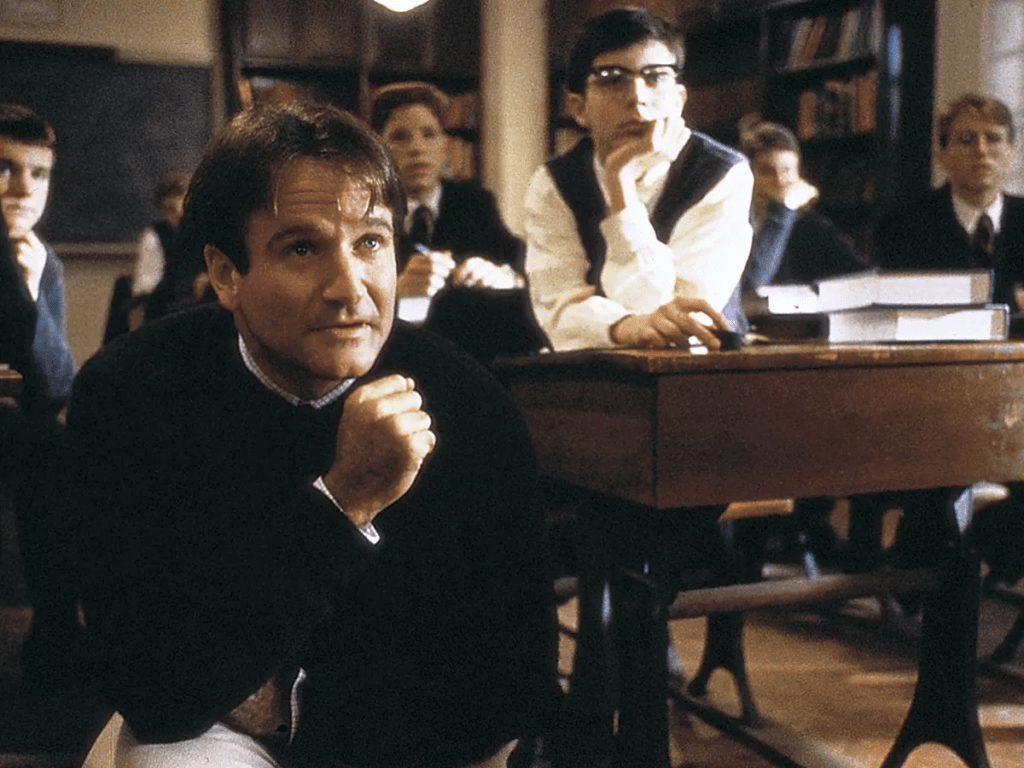
In the good corner you have the John Keatings (Dead Poet’s Society), Miss Honeys (Matilda), Professor Lupins (Harry Potter), Erin Gruwells (Freedom Writers) and Dewey Finns (School of Rock) of the world. Each of their films has a nemesis, a villain, their antithesis sitting across from them in the bad corner. The Miss Trunchbulls, Professor Snapes, various heads of departments with chips on their shoulders… whoever that person is who insists the main teacher sticks rigorously to the syllabus and the school rules. Not only do these antagonists do things which make us actively dislike them personally, the portrayal as them as teachers also leaves us the with the impression that their practice is as evil as they are.
At its most basic, the dichotomy of The Pedagogically Good vs The Pedagogically Evil looks like this:
| Good Teachers | Bad Teachers |
| Relationship focused | Content focused |
| Caring | Strict |
| Goes off-curriculum | Sticks to the curriculum |
| Invests time after school | Not seen after the bell |
| Rebels against school rules | Sticks to school rules |
| Leads on a cult of personality | System-led |
This blog is not saying that the content from the “good” column is actually bad, simply that it is not enough to create the sort of change that is often portrayed in these shows by itself. Without a healthy dose of both columns I do not think students receive a great education or that teachers can have a sustainable life. I’m not suggesting we send students to The Chokey or recite monotonically from a textbook every day but a more nuanced approach to teaching is needed than is often shown on the big screen.
Last week I watched the film Another Round. It follows four teachers who decide to be constantly half-cut to see what effect there is on their personal and professional lives. The film portrays the transition from sober to tipsy as one which positively impacts their teaching practice. These two versions of themselves (bad when sober and good when half-cut) follow the descriptors above. This is represented initially by them leading from the front and going through the same routines every lesson to, after a few drinks, trying novel things, having students sing in the dark with their eyes closed, comparing the students’ own drinking habits with those of Churchill to increase engagement, sitting in students’ seats while pupils lead from the front and, ultimately, inspiring their students to perform at a high level and graduate happy.

The tropes from this movie were nothing new, what struck me was the power that the film had to make me feel inadequate. At a stage in my career where I am fairly confident these “engaging” strategies (although useful and powerful at times) are nowhere near enough, in and of themselves, to get students to outshine the expectations the system places on them. I should not be doubting myself because of this film, yet I find I am. (Chances are you haven’t seen this film but rumours of an English language version with Di Caprio taken the lead role are swirling, so strap yourself in for some pangs of guilt on the horizon but please, please, hold your ground!).
All these films depicting teachers of academic subjects seem to disproportionately focus on novelty and relationships and leave me feeling like I’m the Trunchball in a world of Miss Honeys. I know that my work in the past has yielded great results and that students have felt cherished and cared for along the way yet, it only takes one film and I’m almost ready to insist my next lesson will be outside and that me and my students must rebel against any and all rules. Down with the system!
I found the urge to resist this when I first starting teaching, I’m afraid to say, impossible. I didn’t quite go full Hollywood, I didn’t have the nerve to rip up a textbook in front of students whilst they stood on their desks calling me Captain all the while forming a rock band to revolt against the principal, but at times, I wasn’t far off.
Is there a solution?
I know that a lot of what makes great teaching may not look great on screen and that the majority of the intended audience aren’t experienced teachers and so simplified version of teaching are needed to get the point across but it is possible to do it another way.
I can think of two examples that really resonate with my experience of what it takes to overcome the odds to achieve great results. Two occasions where knowledge-rich environments are combined with clear rules, where the adult carefully balances the needs of explicitly modelling content with forming those all-important relationships in a safe and predictable environment.
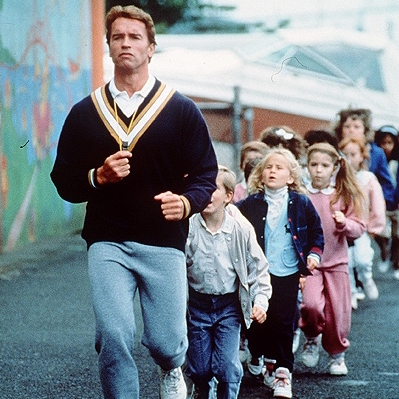
The first, and I mean this quite sincerely, is Arnold Schwarzenegger in Kindergarten Cop. If that isn’t a great example of how clear routines, positive reinforcement and leading from the front can set the scene for a great learning environment I don’t know what is. From the initial chaos that feels all too familiar to the eventual creation of a safe and productive learning environment through clarity and leadership, it feels like a genuine classroom and a genuine, albeit condensed, journey a developing teacher would go on. I can’t think of a better example highlighting the need for routines when working with children whilst also showing the ability to care and nurture a class at the same time. I also can’t think of a better representation of what it can be like teaching a class for the first time.
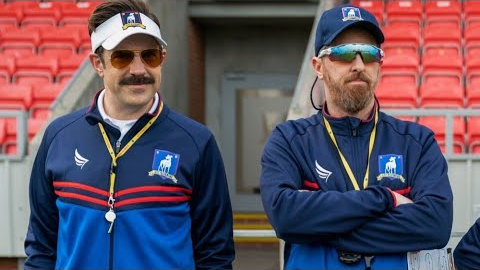
The second is the pair from Ted Lasso, the show’s namesake and Coach Beard. Two Americans in a “fish out of water story” coaching a football team in the UK. Whilst Ted, who knows nothing about football (“Heck, you could fill two internets with what I don’t know about football.”) goes about getting the culture right, Coach Beard is a font of knowledge about the sport. In tandem, they get the team training hard and believing in themselves. Neither of those two men, without the other, would lead to those players being the best versions of themselves on the football pitch. The combination of knowledge, training, and hard work mixed with coaching self-belief, respect, and determination is a rare combo. Although it takes two of them to do the job, combined they represent the qualities any great teacher needs.
Perhaps representations of sports leaders get this balance right more often than not, but why people think academia doesn’t require the same level of hard, sometimes monotonous, work to improve oneself as physical sport baffles me.
Here’s hoping that in the future, we can either have better representations of what it really takes to be a great teacher on screen or, at the very least, that I have the confidence to not feel so bad about myself when I see an inspiring yet flawed teacher presented to me on the TV.
I’m always interested in what people make of this so please feel free to comment with thoughts, questions or incomplete musings. Follow this or my Twitter account Teach_Solutions for similar content in the future. Also, check out the rest of this site, there’s some good stuff knocking about the place.
 Teach Solutions