
Well I think the title of this one speaks for itself. Let’s stop dilly-dallying and get into it.
- SO WHAT?!
“So what?!” is the name of the first technique. It’s the idea that students need to aware that when giving a written response, or are being ask to “show that” something is true that they need to include the “so what”. The part highlighted in yellow are common responses from students, the bit in green, the “so what”, is often what’s missing:
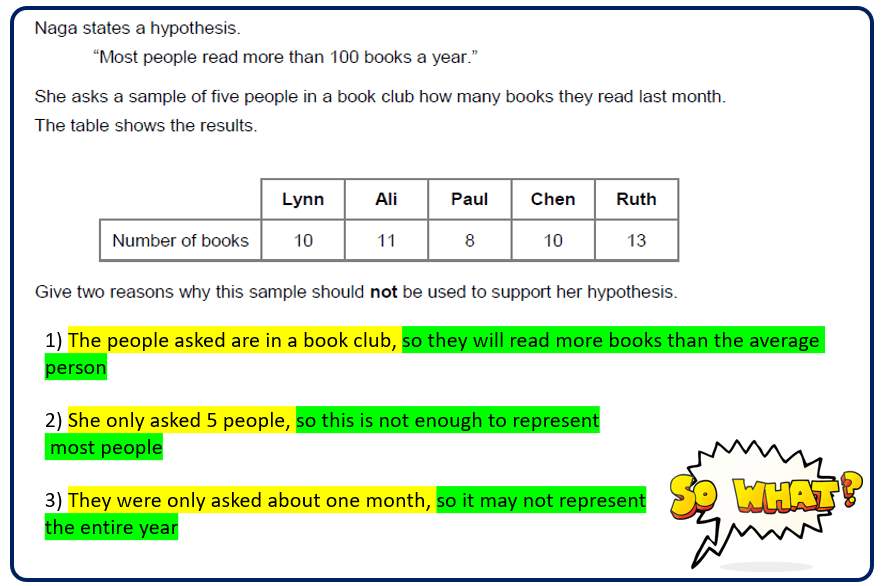
It puts the answer in context and is the reason that sits behind the fact.
See another example and also a GCSE mark scheme for a different question that shows that without the “so what” students will not get the marks:
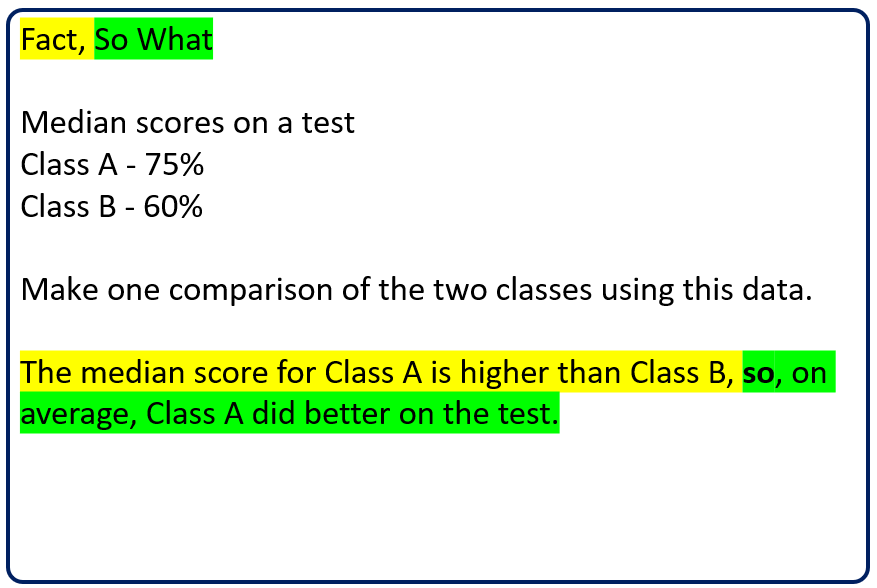
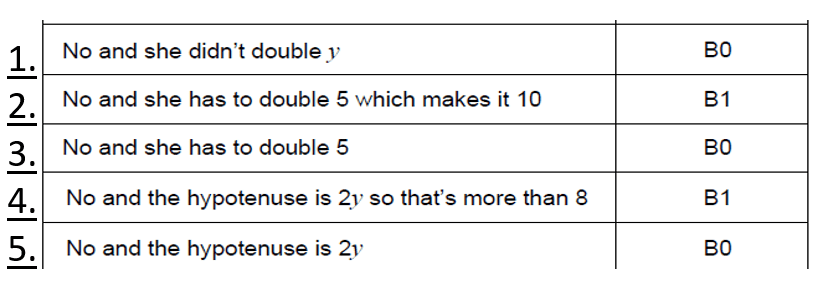
Teaching students to include a “so what” when written responses are required can be a quick way to pick up an extra mark here or there.
2. Number-Free Problems
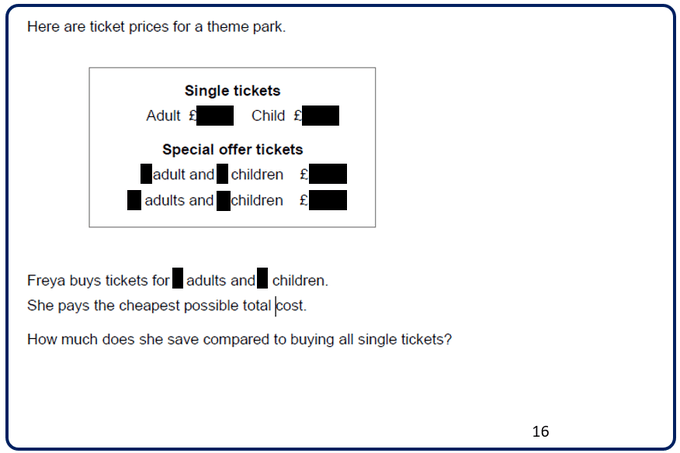
This is a technique for not being stuck on those big, longer, context-heavy, wordier questions. Encourage students to ignore all the numbers and formulate a plan. I put it to you that this question is easier to answer when the numbers, which are initially superfluous, are ignored in the first instance. I appreciate people might have seen me talk about this before so I’ll be brief. If you want to read more about this then go here.
3. Brute Force Questions
There are questions that students might be asked that require no formal technique, just some good old perseverance. Let students know that these questions might come up and not to be put off by them. Trial and improvement, although no longer an explicit part of the curriculum, is still a perfectly valid technique. Check out these recent GCSE questions that students need not be freaked out by:
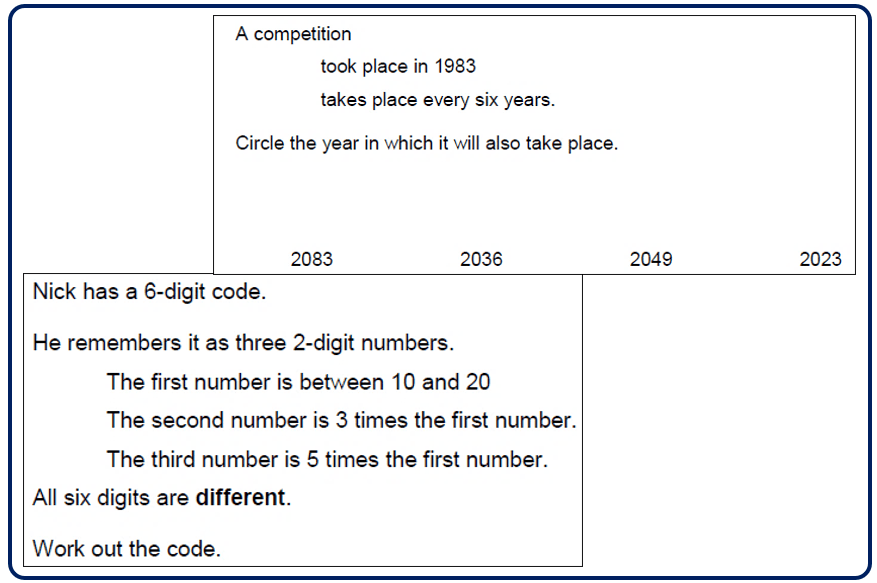
4. System 1 and System 2 Thinking
Students need to slow down and not run on intuition. Training them up about System 1 and System 2 thinking can really help. See here for the best way to do this.
5. Know the Mark Scheme
Students should be aware of a few things about mark schemes to help them out. Firstly, how easy the first/second mark in a big question can be to achieve, explicitly show them this and challenge them to get the first mark in a series of complex questions.
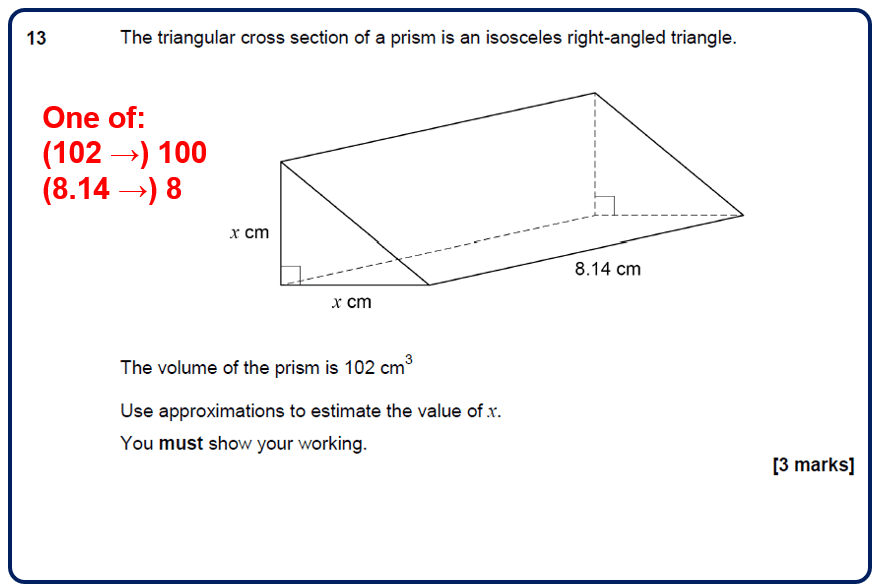
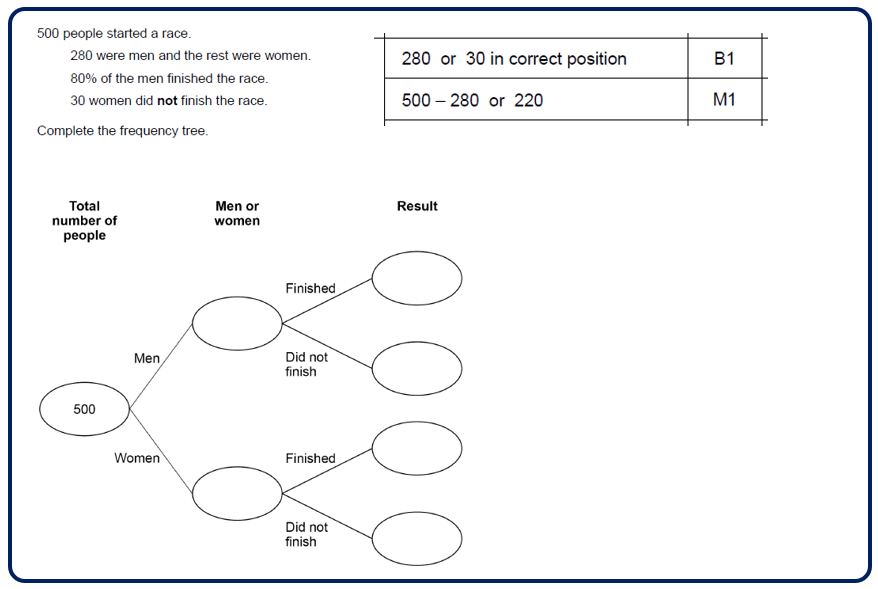
Students should also be taught what happens when you leave more than 1 valid answer in the answer space is.
6. Check Their Work
Have students sit an exam paper. Make sure the beginning is super-accessible for them. Let them work on it for 20-mins. Then let them know there will be a prize for the highest scoring paper.
There is a catch though. Their score is the total marks they have accrued up until the first time they drop marks. Sit back and watch them check through their own work like they never have before.
The important part is, once they are done, to have them reflect on that checking process. Highlight students who found and corrected mistakes. They need to be just as rigorous in the real thing.
There is a real mind-shift required when checking your own work rigorously and having them complete this exercise may be the first time some of them have ever done this. Make sure it isn’t the last!
Summary
These are all tips which can be introduced to students at any stage. Although they work great as tips to share just before they sit their exams, the earlier the better really. I hope these are useful. If you have any more, please share.
I’m always interested in what people make of this so please feel free to comment with thoughts, questions or incomplete musings. Follow this or my Twitter account Teach_Solutions for similar content in the future. Also, check out the rest of this site, there’s some good stuff knocking about the place.
 Teach Solutions
One thought on “6 Ways To Get More Marks On A Maths Paper Without Knowing Any More Maths”