“It’s either right or wrong” isn’t it? Well, is it? No, I don’t think so. It isn’t? No, it isn’t. It’s more than that? It is. How do you know? Here’s how.

On Twitter, when it was still called Twitter, I put 6 mock student responses to questions up alongside the mark scheme. Underneath each was a poll that captured the marks people would award the student. Here are the questions and results. I’ll put the questions first so if you want to play along and mark them yourself without being swayed, feel free. The results are after. Note that the answer highlighted in blue is just the most common response, not necessarily the correct response. The correct responses will be looked at near the end of this post. Each was answered by about 2,000 people.
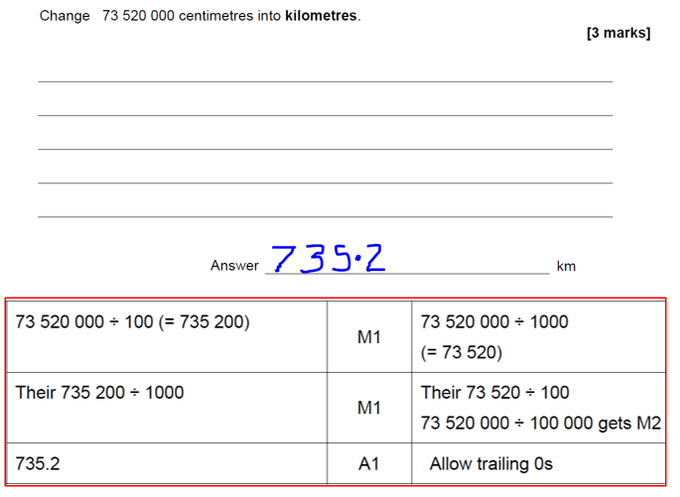
Question 1:
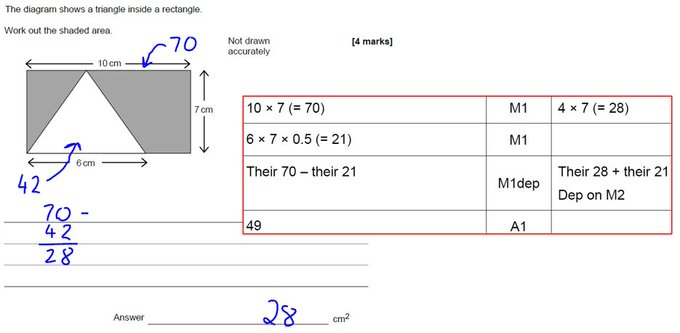
Question 2:
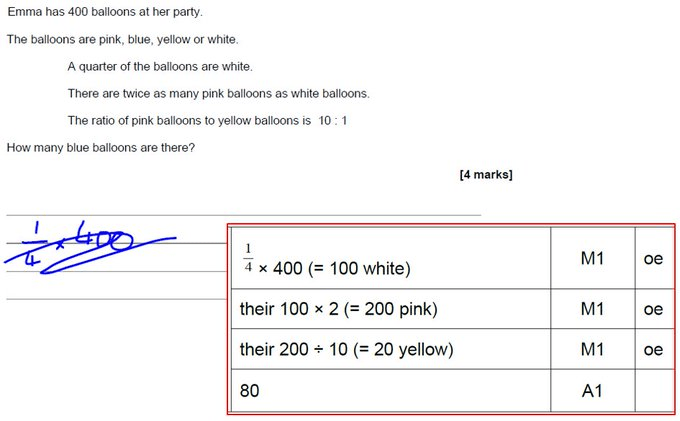
Question 3:
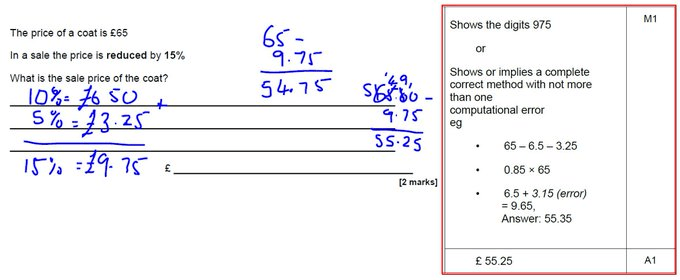
Question 4:
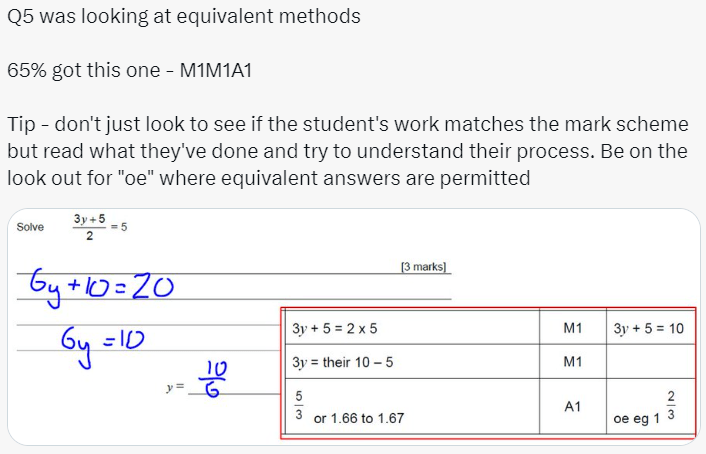
Question 5:

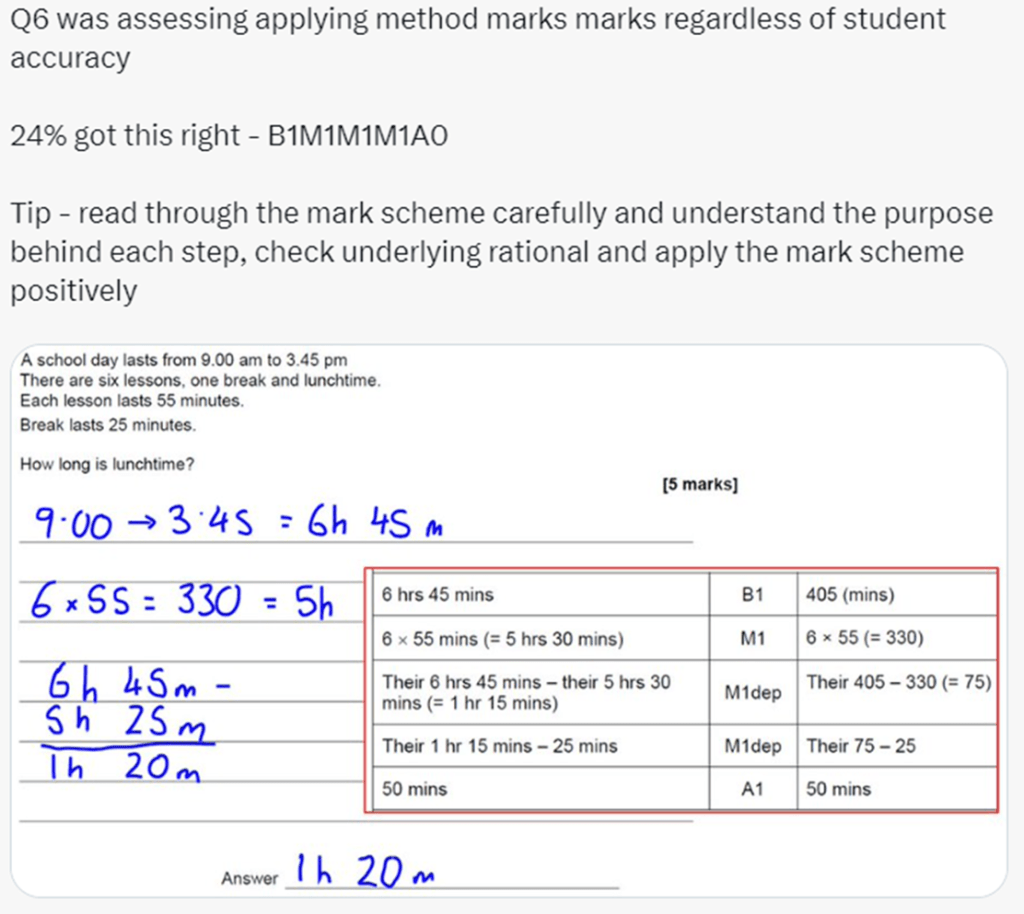
Question 6:

Poll results (answer in blue is not necessarily correct, just most popular):
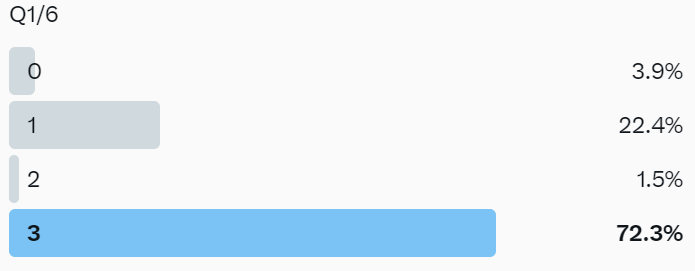


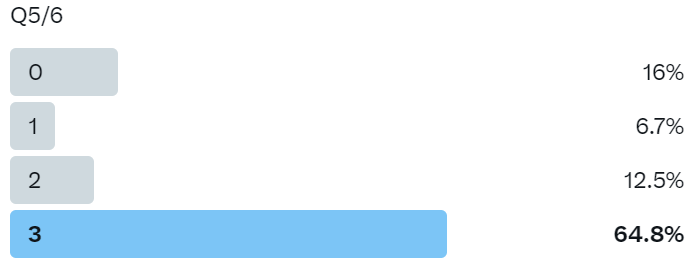
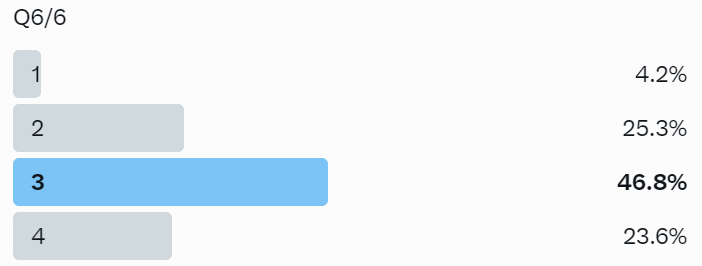
I have done this exercise, or similar, with teachers and every time the results are about as varied as this. It shows, fairly conclusively, that marking a maths paper is not as simple as some might think. Let’s go through why this is important and what can be done about it.
Why is this important?
No matter what your philosophy of mathematics teaching is and regardless of what you think about exams etc, it is hard to argue that we are doing students a disservice if we don’t prepare them for their exams. A small but crucial part of this is exam technique. If teachers don’t know what does and doesn’t give you marks and, maybe more importantly, what you can and cannot be penalised for, then two students who know the same amount of content, can get different grades due to how well their teacher has prepared them in the technicalities of how the paper will be marked.
What can be done about it?
First of all we should acknowledge that there is an issue here. Yes, maths papers may be quicker to mark than others, but it doesn’t mean they are easier to mark. There is a page in every GCSE mark scheme that often gets ignored. It is maybe the most important page in the whole document. It outlines the underlying principles that should guide the examiners marking as they go through the paper. It decodes what all the letters mean and gives overarching advice applicable to every paper.
CPD Resources
If you want to test yourself, I made some resources. They consistent of an exam paper with mock responses and an MS Form where you can input the marks you have awarded the student. The Form will give you your score, not the score the student got, but a score of how accurately you marked the paper. This paper has been completed many times already and there is an Excel doc which has collated all the misconceptions that teachers have had when marking the paper. There is advice in there which can not only be taken forward when marking in the future but which can be shared with students as a way of increasing the marks they may achieve.
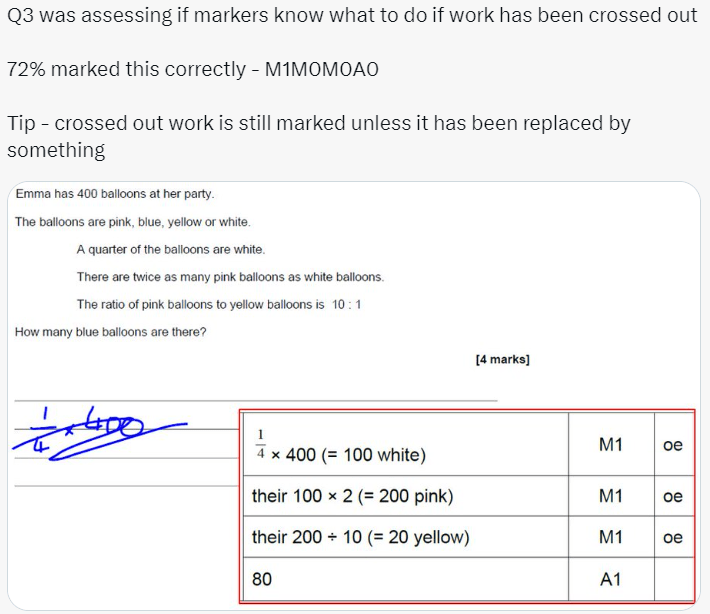
Here are the correct responses for the 6 questions used above along with the reasons why:


Here are links to the resources mentioned above or you can find them in the documents part of this site.
As a HoD or Curriculum Lead in a school this could be a good activity to check the quality of marking in the department. As an individual, you could just use this to test yourself. As a non-maths teacher, you can just use this to appreciate some of the finer complexities we have to deal with.
I’m always interested in what people make of this so please feel free to comment with thoughts, questions or incomplete musings. Follow this or my Twitter account Teach_Solutions for similar content in the future. Also, check out the rest of this site, there’s some good stuff knocking about the place.
 Teach Solutions
2 thoughts on “Marking Maths: It’s Either Right or Wrong. Right? Wrong!”