Starting Strong

Some tips on how to plan and deliver that first lesson. Most likely appropriate for settings where great behaviour and compliance is not a guarantee.

Chipping Norton

When I was on my PGCE we would share horror stories with each other most Friday evenings. This was great fun and often very cathartic. There was an issue though. My first placement school was in Chipping Norton, a quaint market town in rural Oxfordshire. This was David Cameron’s constituency and he had opened their new science block. The school was a stone’s throw away from Jeremy Clarkson’s and Alex James’ houses (the latter would drop in to help the Y9 music students with their Britpop coursework). If you’ve built up a picture of what the students in this school are like, you’d be correct. As a place to hone the craft of teaching without worrying about behaviour, it was a trainee’s dream. The majority of other people on my PGCE were not in the same situation.

Once, in one of our Friday evening moan-fests, I joined in and mentioned how I had a student open a door for me, but in quite a sarcastic manner. Suffice to say, this did not go down well with other trainees who had been verbally abused, had someone start a fire in their classroom, and those that had been physically intimidated. Still, if you’d seen the smirk that kid had on his face when he opened the door for me, I think you’d understand.

I mention the above because I want to give some advice about how to start that first lesson in the academic year with a new class. This advice, I think, mostly holds for the sorts of schools I did not train in but have then spent the majority of my career working at. If these tips don’t seem necessary for you that’s not a problem. They are tips I’ve picked up, the hard way, that have helped me over time. If even one helps you too, that’s enough for me.

Before the First Lesson

  1. Decide the routines you want – Do not start your first lesson coming up with some sort of agreed behavioural charter. There are a lot of students in that room that will need clear rules and leadership. Decide what your expectations are in advance. What routines do you want your students to learn? What ways of working do you want them to have for different phases of your lesson? Decide on these and plan to communicate them, explicitly, with your students from day 1.
  2. Learn the policy – This one is particularly relevant if it is a new school for you. Speak to an experienced teacher and ask them what language the students are used to hearing from their teacher when it comes to using the behaviour policy. Are there verbal warnings, 3 strikes and your out, some sort of C1, C2, C3 system…. Whatever it is, use it, and the language associated with it confidently from day 1. It lets the students know you understand the systems in place. Do not make your own rules that go above, beyond or sideways to the school’s policy. This isn’t fair on the students and (fingers crossed) shouldn’t be needed.
  3. Content not a barrier – Plan lessons where the content is definitely not going to be a barrier to success. If this means pausing how ambitious the curriculum is temporarily, then so be it. It will be worth it in the long run and you need to be sure in the lesson that students are able to access the content you put in front of them as you establish the routines and culture you want. If some complain, let them know it will get more challenging over time as you get to know them better.
  4. Start tight and loosen later – Do not plan any outlandish lessons to begin with. Keep them routine and allow the challenge and intrigue to come from the content. Group tasks, talk tasks, lessons outside… can all wait until you have sorted out the basics.
  5. Make a Seating Plan – Let them know exactly where they will be sitting and stick to that initially. It will most likely be the first time a student challenges a decision you have made. If you can, check with a head of year that the plan is sensible but stick to it for that first lesson. Changes can be made at the start of the next lesson if needed but hold the line publicly with them all.

During the Lesson

  1. Learn their names – Have that seating plan to hand throughout the lesson and learn and use their names as much as possible. If there are pictures on your school’s data system then try to find them and put some faces to names in advance as well just to freak them out a little. It will mostly likely be the case that you end up learning where students sit before you learn who they actually are. I would get students to pack up early and move seats at the end of each lesson. They could only go if I got their name right. This meant I knew them and not just where they sat. This would continue until I would confidently get 100% correct every time. Letting students know that you want to know their names and that whilst they have about 10 new teacher’s names to learn, that you have hundreds of new students makes them sympathetic to the situation.
  2. Rehearse the routines – Have students rehearse the routines you want them to use. If you want a 5-minute silent starter then have 10 ready in advance and have students practise it until they get it right. It may make the first few lessons a slog but it’ll pay dividends in the long run. If you let one student talk in that first lesson, you are giving permission for them all the talk in the next one.
  3. Praise – Relax (or at least appear relaxed on the surface) and give students plenty of praise where it is earned. Not smiling until Christmas is an archaic notion you may come across. In a school with supportive behaviour management systems you should be able to be yourself and trust that the system has your back. Make students feel comfortable and let them know that their hard work will be rewarded.
  4. Firm but fair from day 1 – Do not make any special allowances because it’s the start of the year. Set out your stool early and do so clearly. Sanctions, where earned, will help students know where the line is. It is much easier to loosen rules later (though be sure of your rationale for doing so) than it is to tighten any.

After the Lesson

  1. Phone Home – Phone home for students with a (rough) 3:1 ratio of positive to corrective messages. This is likely not sustainable in the long run but only needs to happen for the first week or so.
  2. Over-Mark their work – This is not sustainable in the long run either, but having eyes on students work initially and writing comments and picking up on issues early on is a great way of preventing them from arising further down the line. Give them your most attentive self for the first 2 weeks then ease off into a more sustainable way of working afterwards.
  3. Catch up Individually – Meet students on an individual basis, with a head of year or form tutor if necessary, that did not act how you wanted and spell out very clearly, what you expect to see of them next time and how sure you are that they can rise to the expectations you are setting for them.

There are a few more tips focused on behaviour which may be useful here.

If you have any more to add then please do so in the comments.

Best of luck with the start of your year!

I’m always interested in what people make of this so please feel free to comment with thoughts, questions or incomplete musings. Follow this or my Twitter account Teach_Solutions for similar content in the future.
Behavioural Economics – An Untapped Goldmine for Education?

An exploration of what behavioural economics may be able to offer education; not in contrast to cognitive science, but complimentary to it.

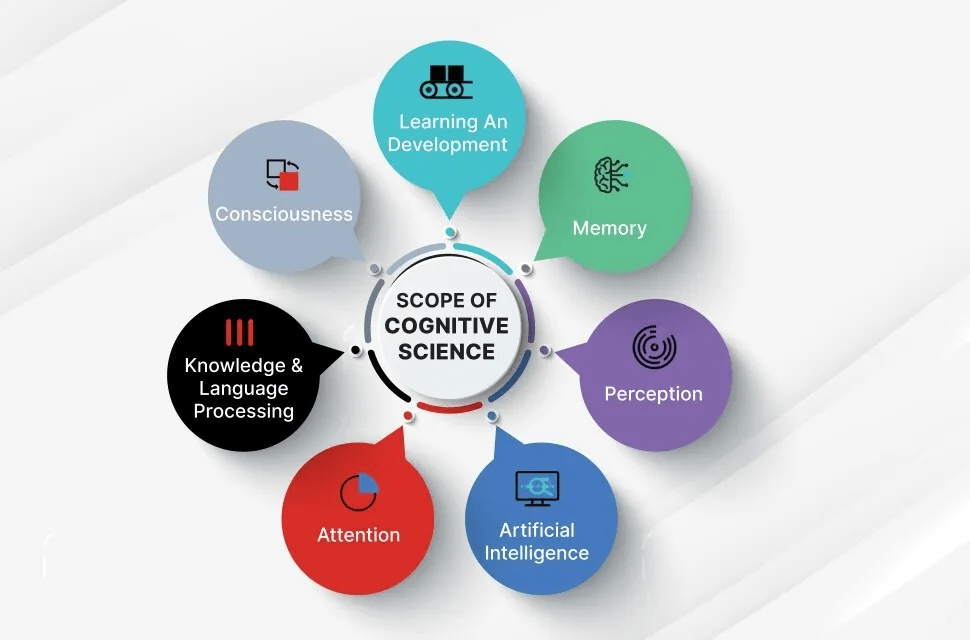
No one quite knows when it started, but for a while now cognitive science has been ever-present in discussions around best teaching practice. If you accept learning to be a change in long-term memory (which even if you don’t it’s hard to argue that it doesn’t have a vital role to play) then all of a sudden this huge bank of research looking into memory and how that part of the brain works is useful.

This blog warns about the dangers of treating cognitive science as a “catch-all” for teaching and asks if there is another domain out there, an unexplored goldmine, ready to shed light on some pedagogical aspects that cognitive science does not cover.

Power of a Shared Language

Ideas around retrieval practice, interleaving, interweaving, dual-coding, explicit instruction, schema, cognitive load… all originate in the realm of cognitive science. These are all great things which have had a huge benefit on education recently for many reasons, not least because simply having a shared language is a powerful thing.

All the ideas above have been written about A LOT. The power of a shared language has allowed teachers that did those things anyway to talk about them more succinctly. It allowed a community to experiment, tweak and innovate all these ideas and apply them to the classroom in the knowledge they were all working on the same thing. It allowed people to codify aspects of teaching and break it down into discrete parts that allow it to be explicitly taught. The ability to talk about an idea without having to show someone it is a powerful thing.

Cognitive Science – Necessary but not Sufficient

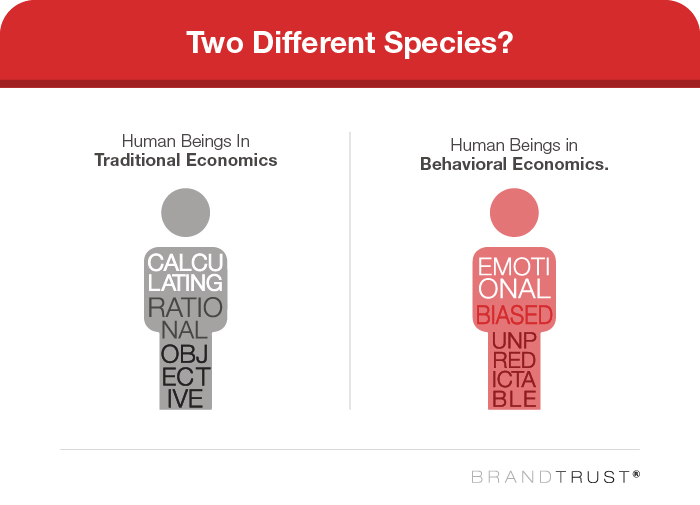
Cognitive science is not a panacea, it focuses very inwardly on the processes of the brain. By and large, its studies of how learning happens are done in isolation, in a lab. It misses out a massive part of the realities of teaching, namely, that most of the time it happens in a room full of not 1 but 30 brains. Each of those is living inside messy, illogical, hormonal, confused, unique, incredible, frustrating, funny, brave, unpredictable, bored, inspirational, exhausted humans.

Cognitive science does not exhaustively cover what it takes to be a teacher – not even close; in its defence it has never claimed to, but I do worry about increasingly seeing teaching practice becoming synonymous with cognitive science.

It is a necessary but not sufficient component of education. Its effects will only work if all your pupils are motivated to engage with the content in the first place. That sounds simple enough but behavioural issues are often the biggest barrier teachers face in their delivery of content. No matter how well you know their brain should work in theory, if you can’t get them to engage with the content in the first place it will be, inevitably, ineffective.

Some Unanswered Questions

Some examples of common issues teachers have that cognitive science cannot solve are:

  • why do they make silly mistakes when they actually know the answer?
  • why don’t students try their hardest on a test despite wanting to do well?
  • why don’t they revise when they know it is good for them?
  • how do I win a class back that I feel I’ve lost?
  • how should I end my lesson?
  • how do I get them to behave?
  • how do I get them to do their homework?
  • why do they make bad choices despite seemingly wanting to learn?
  • how do I get them to work on a wet and windy Wednesday?

So does it exist? Is there something which has been studied for decades which contains the tools, tips, and shared language we need to tackle things like the questions above? Something which could be the starting point of a new shared language which could codify and share some of the great practice that already exists? Well, I think it does.

Behavioural Economics

Cognitive science is to learning as behavioural economics may be to behaviour for learning. If you think there isn’t as much or more to be gleaned from behavioural economics than there is from cognitive science then let me try and convince you with the below.

As you go through these, see if they resonate with problems you have experienced. Imagine there being as many books written about their application to education as there are for cognitive science. Imagine having a shared language so people can talk the same language around these things, develop strategies on the same issue, talk concisely to each other about known problems. Imagine these ideas being researched to see what effect there is on learning. Then imagine the power that could have on the educational landscape.

I’m going to introduce 8 ideas, explain them, and discuss implications they could have in the classroom. This is just the tip of the iceberg though. Both in terms of the concepts out there and how the ones mentioned could be used for by schools.

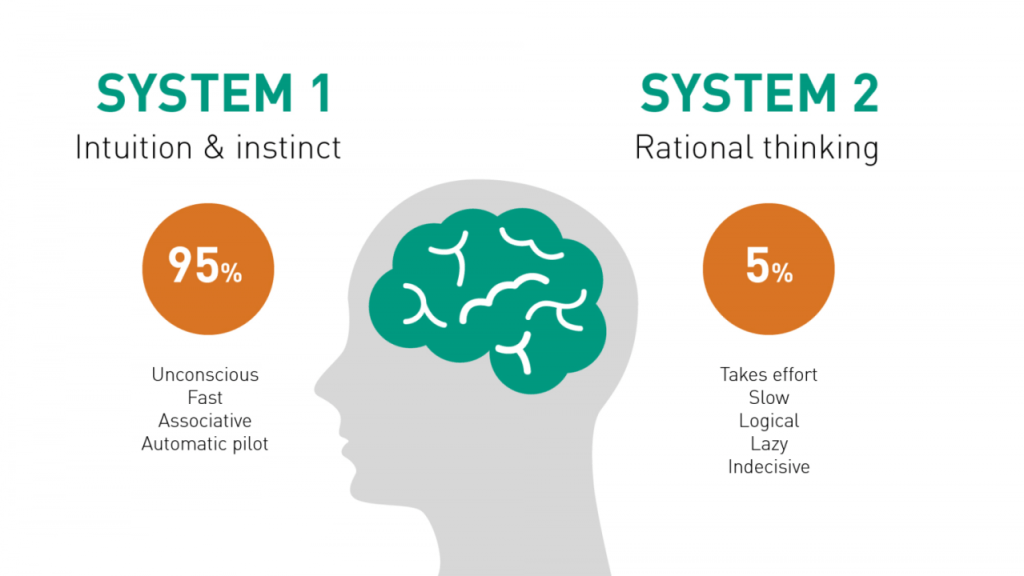
1/8 System 1 and System 2 Thinking

Making students (and staff) aware that humans spend most of their time on autopilot is vital. If you haven’t come across system 1 and system 2 thinking then look into it. It has so many implications for the classroom.

A typical question used to highlight the issues with system 1 thinking is the bat and ball question:

The first time people see this question it is almost impossible to think the answer is not $1.00. A quick bit of maths however shows you that it can’t be the case. What’s happened there? Well, your system 1 brain has chosen the most intuitive answer without doing much thinking about it. System 1 thinking is quiet but susceptible. Forcing students out of this mode is vital to getting the best out of them.

What if I told you this next question is designed to trip you up? It is designed to be as deceptive as the first question:

I’d bet any money this question would have a higher success rate than the first. I also think this would happen regardless of the order the questions were presented. The important thing is that you were jolted out of system 1 thinking and switched to system 2. All by yourself. Imagine harnessing this with students!

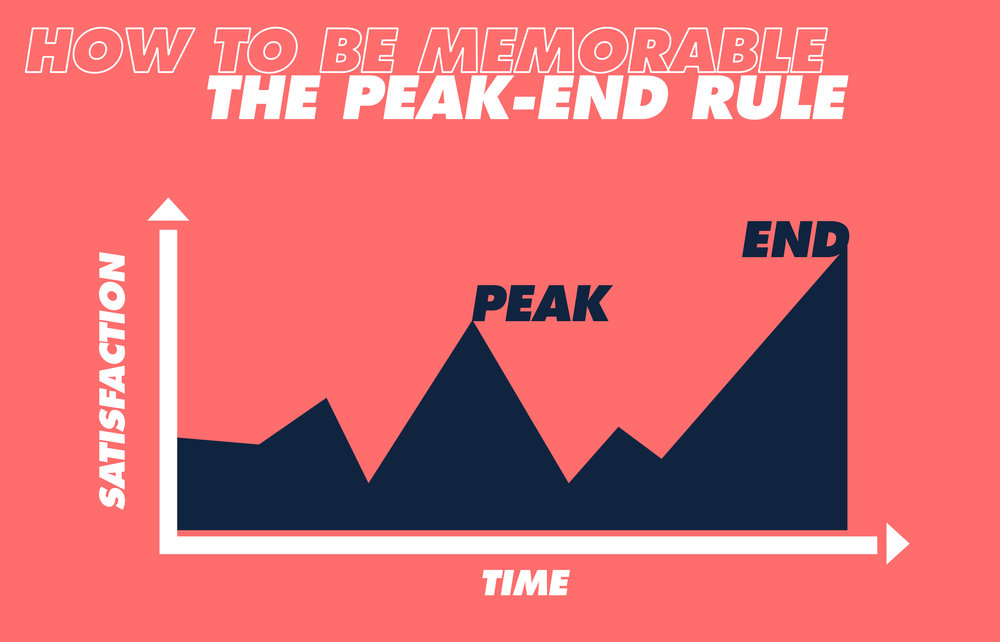
2/8 The Peak-End Rule

In an episode, there seems to be two main moments that stick in people’s minds. The emotional peak (the most intense event during the episode) and the end of the it. If there was ever a reason to really think hard about how your lessons end this would be it. The rule states that how students feel about themselves in relation to your subject is going to be heavily influenced by how they feel at the end. If you are always ending your lesson with the hardest content, what effect might this have? Conversely, if the lesson ends purposefully, with praise being shared and an achievable question being asked, what effect might that have?

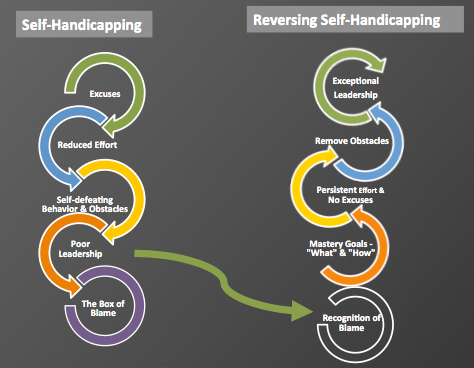
3/8 Self-Handicapping

For all sorts of reasons, humans do not always try their hardest. Deliberate self-sabotage to save face, reduce the effort needed, have excuses for poor performance… is a known phenomenon. Knowing this is the first step to tackling it. Talking about it with students and giving them the language to discuss and address unhelpful tendencies can sometimes be enough to change behaviour.

4/8 Recency Bias

Humans are much more influenced by what has happened more recently. A gambler who has won the last 3 rounds but lost the previous 10 is much more likely to believe they’re doing well than someone who won the first 3 and lost the next 10.

This could have a lot of implications in the classroom but one I think that could be particularly useful is in thinking about how to affect change on a class that you think you’ve lost. Knowing that the last few lessons are going to influence their perceptions on the class much more than anything that’s happened previously should give hope to it never being too late to turn things around.

5/8 Short-Term over Long-Term

Humans are much more concerned with short-term benefits than they are with long-term ones. Students may well want to do well in their exams, they may also know exactly how to revise, putting these two together when their exams are a long way away is not a given though. Creating short-term rewards where you can to encourage motivation may not only be sensible, it may be necessary.

6/8 We Want to Fit In

The desire to fit in can overrule the desire to do what you think is right in the moment. Knowing that if poor behaviour gets the spotlight in the classroom than it may encourage more to join in rather than the desired effect teachers are often hoping for which is to detour it.

7/8 Anchoring Effect

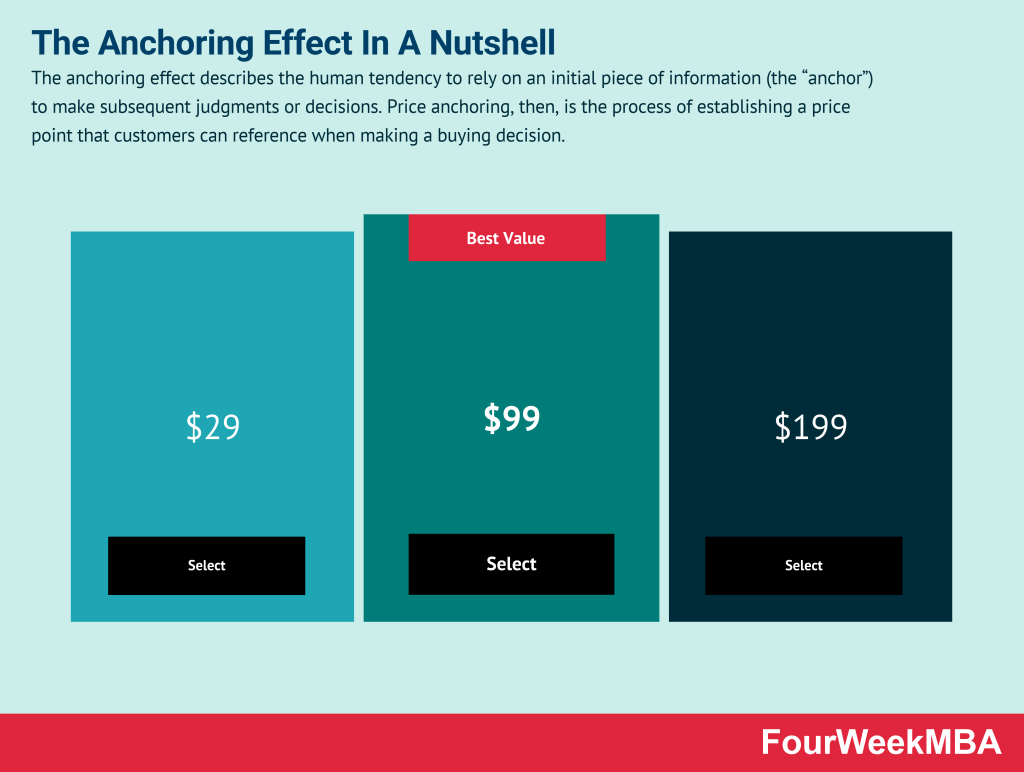
If you want something to be appealing, have something to compare it to where it looks favourable. The typical example of this is popcorn prices at the cinema. They are all ridiculous but buying a large for £5.80 suddenly seems attractive is a medium costs £5.40. Imagine a cold dark afternoon where you want students to complete 20-mins of work independently. Why not give them the choice between that and 30-mins wort of work independently. All of a sudden that 20-min task makes them feel like winners.

8/8 Availability Heuristics

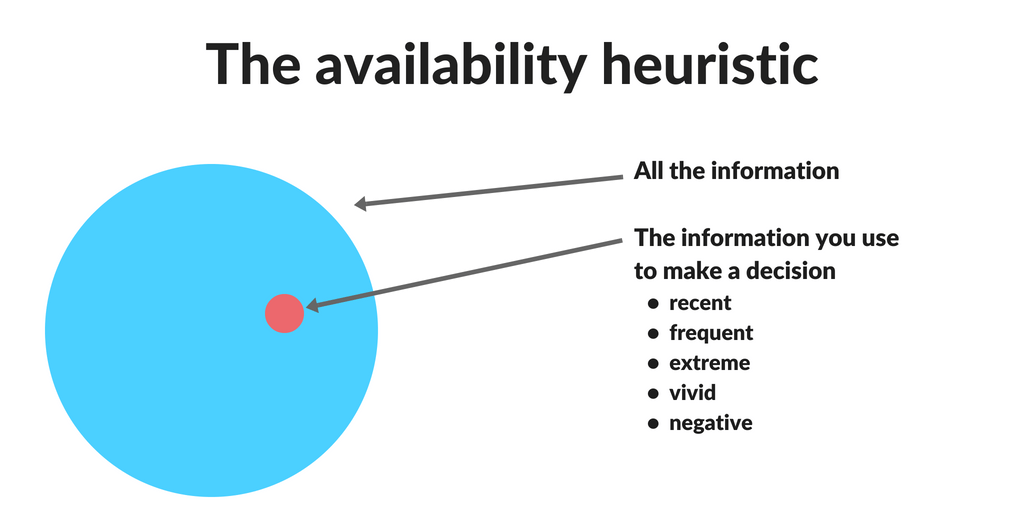
Humans, it turns out, are really bad at making decisions. If we start to combine ideas like system 1 and system 2 thinking and recency bias you get the begins of ideas like availability heuristics. The notion that we tend to only make decisions based on immediately available information rather than all the known information. Front loading expectations and consequences may then help shift behaviour patterns to be more desirable. Moving to a more proactive rather than reactive behaviour management style can help stop issues before they even begin.

Summary

I hope that at least some of the 8 ideas above resonate with people’s classroom experiences. I think that there is an untapped goldmine of research that is waiting to be applied to the classroom and I can’t wait to explore these ideas further in the future. Cognitive science is incredible for making sure an engaged individual is learning well, behavioural economics may be necessary to ensure that engagement is there in the first place.

I’m always interested in what people make of this so please feel free to comment with thoughts, questions or incomplete musings. Follow this or my Twitter account Teach_Solutions for similar content in the future.