School Leaders: Cultivate, Don’t Innovate

A post addressing the need for leaders to go out and visit other schools. To find best practice and bring it back to their setting instead of feeling the burden of finding new solutions to old problems.

Imagine you were working in the private sector, for a mobile phone company say. Let’s also say you measure success by how much money you make. If you had two options then, one where you unashamedly steal (with no adverse or legal consequences) all the best bits from Google, Samsung and iPhone and the other where you start from scratch and take a punt on something completely new and untested, which would you choose?

This question has an obvious answer but also due to copyright laws and patents etc. can only ever be hypothetical in the private sector.

Success in the private sector is driven by innovation. New ideas. Things that make you stand out. Something sparkly that will pull customers in. This thinking, this idealisation of being unique, seems to exist in the education sector. But should it? Can we apply the same thinking in the scenario above to the education sector?

The issue with innovation

However you measure success in education (whether it’s by results, pastoral, extra-curricular opportunities…), there are likely a dozen schools who are already doing this incredibly well and much better than you are. That’s no disrespect to your setting, it’s just likely given how many schools there are that, at least a handful, who are doing what you want to do, but better. They have already solved your problem.

There are no laws against copying an educational approach. Schools don’t patent their approach to teaching. Headteachers don’t erect walls around their schools away from the prying eyes of visitors. So why doesn’t this happen? Why don’t people just choose to visit those that are doing what they want to achieve already and implement the same thing in their own setting?

Inevitably, some tweaks, maybe some superficial changes, will be necessary to ensuring the way of working fits into a school’s unique setting but as long as the active ingredients remain, it should still be effective.

It’s hard not to think that ego plays a role in preventing this from happening. That leaders have the desire to devise their own way of doing something and won’t employ any strategy that’s used elsewhere but that can’t be the full answer. Many a time I’ve heard advice be directly given to schools to find innovative approaches to their problems. These schools aren’t top of their class and their problems aren’t unique. So why innovate? Why not send leaders out into the world to cultivate instead? To find the best of what’s out there and then use their skill and expertise to make the thing work in their own setting.

We work in such an open and giving sector, I’m yet to encounter a school that, given the opportunity, won’t open its doors to other teachers to help them out. So why doesn’t this happen more? Whatever the reason (my current theory is just that a private sector mindset has just seeped too far into the world of education) it is hurting the children we have all set out to serve.

The challenge of cultivation

Leaders in schools should see it as their job, and be empowered to, go out and cultivate the best of what is it out there. Their efforts should be spent personalising it to their setting, devising an adequate implementation strategy and then sustaining it. That is hard enough. They shouldn’t be expected, or encouraged, to find a novel solution to problems that people have already solved. They shouldn’t be wasting their time on innovation.

This still won’t be easy. It is hard to do the above. It is also hard to visit a place demonstrating best practice, getting the outcomes that you seek, and for one to decode what the active ingredients are. It is so easy to walk away with a superficial takeaway which is easy to implement but ultimately ineffective by itself (see the dangers of that here).

A plea

The next time you have a problem to solve in a school. Like a really big problem. How to increase attendance? How to increase results? How to decrease suspensions?… Don’t feel like you need to find a new solution. Go out and visit places, see what works, and then think about how you can take this tried and tested process and make it a success in your setting.

School leaders should be encouraged to cultivate the best of what is out there, they shouldn’t be wasting time needlessly trying to innovate. There is no shame in that and, ultimately, the children we serve will benefit.

Buying Coconut Oil Didn’t Give Me A Six-Pack

A cautionary tale about not taking the easy option in education if you want to truly transform practice

I’ll start with a personal story from a few years back but will then quickly make the link to the world of education and the key point I want to get across in this post (the story is short and connected, I promise).

The Story

When I lived in London I had a flatmate who was in great physical shape. Proper front cover of magazine vibes. She was in the sort of shape I always wished I’d been in. She had converted the garage into a gym and used it on a near daily basis. She cycled to work. She rarely drank alcohol. She cooked EVERY meal from scratch. She used coconut oil instead of olive oil. She got a good amount of sleep. She had a relatively low stress job and a great work-life balance.

I envied her and living with her inspired me to get into the sort of shape I hadn’t achieved so far in life. So here’s what I did… I bought some coconut oil.

That’s it. Of that list of things she was doing that helped her reach her goal I copied only that. It’ll be of little surprise for you to find out that years later I’m still after that classic beach-bod. What’s maybe more sad, is that I still haven’t even finished the jar of coconut oil yet.

The Point

Visiting other schools is often incredible CPD and when you see something in action that blows you away it can make you feel both envious and inspired.

Going out there and visiting great schools knowing in advance that they have overcome hurdles you face currently or that have successfully implemented something that you want to embed is a great thing to do. The level of focus and specificity of the visit will most likely lead to focused and purposeful conversations.

Visiting schools that are getting great results can be great CPD too. These may be less focused visits but can be equally valuable. The chance to visit and try and find out what they are doing that is working well, what ideas you can take back, what processes you can steal is more often than not, worthwhile. These less-focused visits need to come with a health-warning though.

A few years ago when Michaela Community School was all the rage and on track to be one of the top-performing schools for progress in the country they attracted a lot of visitors. Of all the things they were doing, one seemed to become the new “must-have” in schools almost overnight. The knowledge organiser. These now take so many different forms its hard to even define what one is any more. They’re also something that Michaela distanced themselves from after reviewing their effectiveness. Alas though, the damage was done. The knowledge organiser was the equivalent of my flatmate’s coconut oil. It was the easiest thing to replicate and people thought it would drive results up in their own settings. Like my six-pack however, in most institutions there is still a lot left to be desired.

I want to outline ideas I’m seeing as the next “knowledge organiser”. Ideas or buzzwords that may feel small and easily replicated which are being held up as a panacea to all of education’s woes but in reality aren’t much more than superficial decoration or are systems which need a monumental amount of thought and consideration before being rolled out effectively in a school.

Beware The Next Knowledge Organiser

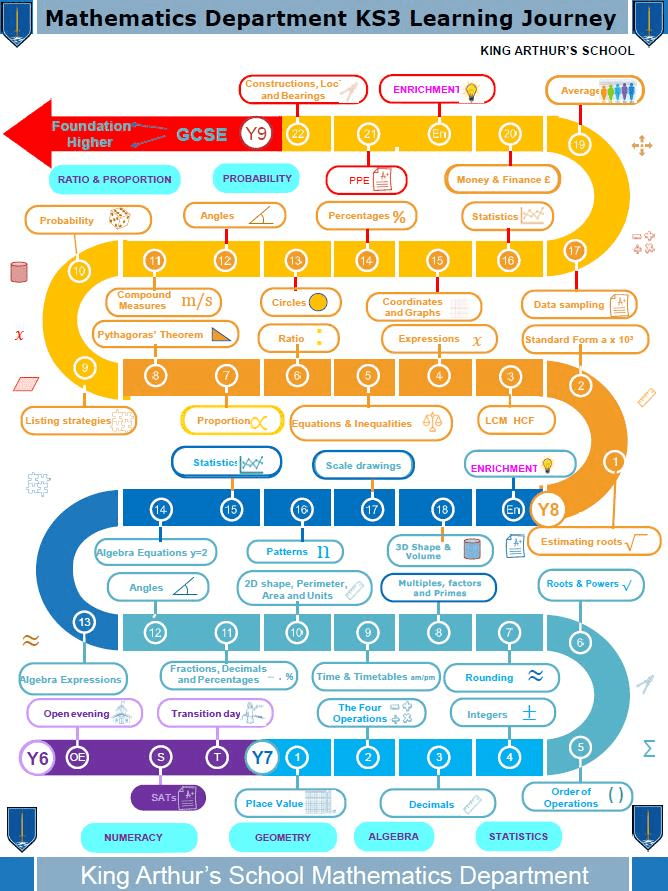
Visual Curriculum Maps: Have you seen these yet? These spiral journeys colourfully map out a student’s path through a subject . If you haven’t, you can pay a few quid to download some from TES. They worry me though. Who are these benefiting and how? The amount of time put into creating a document which will not be referred to or of use throughout an academic year baffles me. I won’t even start on how demoralising it may be for a student entering Y7 without a grasp of the basics to get to Y9 and find out they are years “behind” according to this flightpath! Still, at least they look pretty.

Mini Whiteboards: I LOVE MWBs. They are, in my opinion, a necessary, but not sufficient, element of effective teaching. They are the quickest and easiest way I’ve seen of engaging a class full of students in deep and accountable thinking. HOW they are used though is vital. There is no point collecting all that data and doing nothing with it. The active ingredient of what makes MWBs so effective can so often be missed and it breaks my heart when I see it. I think we should be talking less about mini whiteboards and more about responsive teaching and means of mass participation. THEY are the active ingredients, not the piece of plastic.

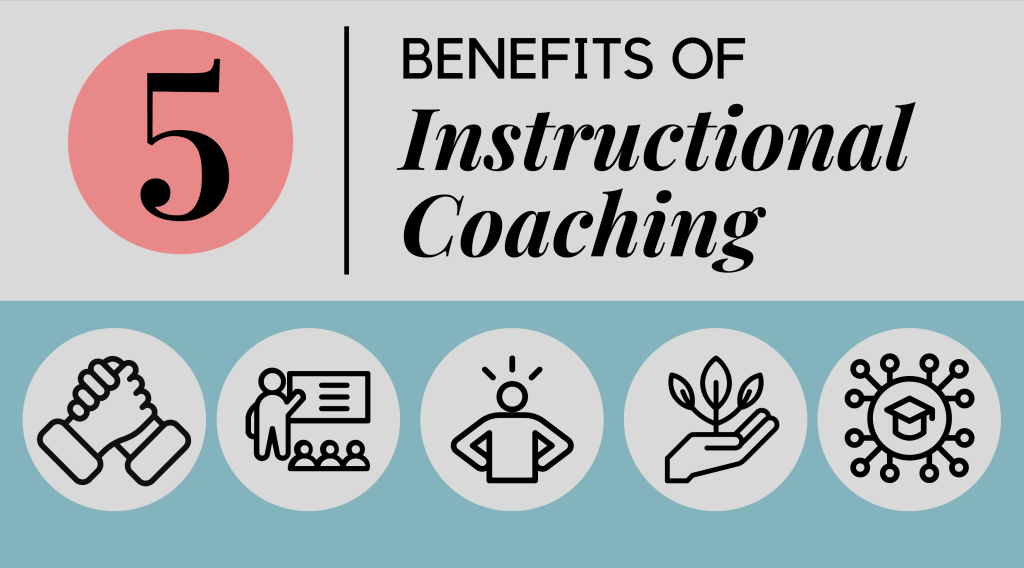
Instructional Coaching: Hard to find a bigger buzzword at the moment. Don’t get me wrong, I think it’s incredible. But the amount of care and attention that needs to go alongside successful implementation of this is immense. If a school thinks that it’s implementing Instructional Coaching overnight then what it’s implementing is not Instructional Coaching.

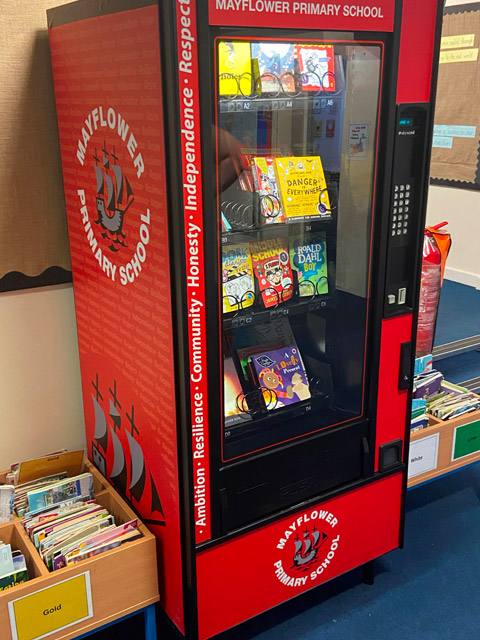
Book Vending Machines: These are a little old now and I wonder if they are still as fully stocked and shiny as they once were on Twitter so long ago. If the money spent on them was spent on actual books and if a love of reading was built intrinsically, rather than extrinsically, maybe we’d be in a better place.

No Marking Policy: The amount of pointless time-consuming marking I’m supposed to have done in my time makes the idea of not marking anything appealing. There is a balance though and there are some things only an expert looking at a piece of student work can tell. Beware blanket policies!

SLANT: Using SLANT does not make you good or evil. It doesn’t give you a calm classroom either. The culture and delivery around any behaviour management system is crucial. Two classrooms that use SLANT can be as different as any two other classrooms in the world. We need to stop over-simplifying complex ideas in education, and we need to do so quickly (with a straight back and empty hands if possible).

Takeaways

It is important to remember that it is never just one thing that makes an education transformative. It is always a team effort and it is definitely a complicated task. If you think you’ve found something that you can install overnight which will make a seismic difference I suggest you think twice before rolling out a potentially short-lived and ineffective strategy.

If you find yourself seeing a new idea or visiting a school getting incredible results and you’re not sure how they are doing it ask yourself or staff working there some questions.

Questions for them:

  • What do you attribute your success to?
  • What did the implementation of this look like?
  • How long did you take for you to be happy with it?
  • What lessons did you learn along the way?
  • If you were to start again, what would you definitely keep?

Questions for you:

  • What do I hope to achieve by implementing this? How will I know it’s worked?
  • Is this the highest leverage use of my time?
  • Will this still be working in two years time?
  • What will the impact on students be?
  • How will I make sure it is embedded?
  • Do staff have time and capacity to do this well?

Are you thinking what I’m thinking?

How can we all be sure we’re talking about the same thing unless we’ve seen it?

Have you ever read a book and then when the film comes out things aren’t quite how you imagined them to be? What if the same happens in education?

It feels entirely possible to either metaphorically or literally drown in the amount of literature that is being released (this blog included) giving advice about how to do things well or better in education.

Nothing wrong with any of that. It’s great. The availability to access other people’s thoughts and ideas has never been easier. This has lead to incredible conversations, fueled further blogs, podcasts, articles, books which has then fueled more blogs, podcasts, articles and books, which has then… and hopefully somewhere along the line the experience pupils receive has been improved as well.

Although the profession now seems to be talking the same language (cognitive load, explicit instruction, SLANT, be seen looking, I do/We do/You do…), are we certain that means the same to all of us? Much like we can never be sure if two people see colours the same, can we ever be sure we mean the same thing when we use these terms? I suspect, unfortunately, not. At least not without tearing yourself away from just the words and getting yourself into a school and actually seeing it in action!

I felt relatively well read around all this but nothing could prepare me for what it was like working at King Solomon Academy. All of a sudden, I wasn’t reading or listening to thoughts about great practice, I was seeing it and living it.

I saw silent corridors be purposeful (everyone has their doors open all the time and break times don’t happen all at the same time so any noise in the corridor was going to disturb others lessons), family dining be truly commutity focused, lessons be distraction free, warm-strict be applied consistently, explicit instruction in action, think pair share working like a well-oiled machine. It raised the bar for me of what a school is able to acheive.

Having seen what is possible feeds into everything else I do. It raises expectations, gives me no reason to say something “isn’t possible” and, I hope, helps me push the people I work with to be even greater versions of themselves.

If it’s been a while since you’ve visited another school then try to change that. People’s doors seem more open than ever. From the wonderful programme Steplab are running to the general kindness of people that open their doors to others. Visiting a school has never been easier. The availability of data these days should mean you can also pick a school that suits your catchment and gets great outcomes.

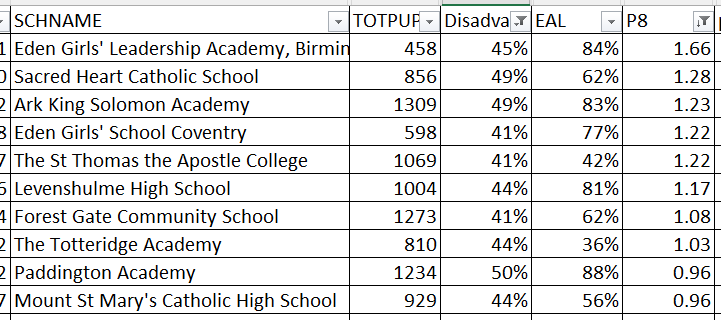
Here is a table, for example, of top progress scores for Secondary schools from 2022 who have more than 40% disadvantaged cohort. Many of these schools welcome visitors and you can be pretty sure you’ll learn something new if you visit.

Next time you are thinking about reading one more book, why not try asking for a day to visit somewhere great instead? Any sensible headteacher will be aware of the power that this CPD can have and the experience may just help reframe everything you thought was possible.

I’m always interested in what people make of this so please feel free to comment with thoughts, questions or incomplete musings. Follow this or my Twitter account Teach_Solutions for similar content in the future.