Finish Strong

This blog gives advice for all the things teachers should and should not be doing in that run up to exam season

A while ago I wrote a blog aimed at giving tips on how to start strong with a new class at the start of a year, it’s here and was called “Starting Strong”. As the countdown to exams have started it felt right to close the loop with this one.

Here are some dos and don’ts for working with pupils as their exams beckon. I am going to focus this around Y11 Maths in England but I suspect it wouldn’t take too much work for someone to decide what parts would apply to them with a different subject/country/age-group.

Let’s start with 7 “don’ts”. These are things I see often enough that they warrant a warning sticker.

It’s important to remember that students aren’t going to start learning any differently just because exams are nearer. Don’t put one lesson a week aside for them to complete an exam paper if you haven’t had time to address all the major gaps in their learning from the last one. This is a form of “means end conflation” but getting them to sit lots of papers is not necessarily going to make them any better at completing them.

If students have completed a paper, it isn’t a good use of their time to simply see the teacher go through it on a visualiser whilst they self-assess. If the pupil has got a question correct, they learn nothing. If they got it wrong, they need some teaching and purposeful practice on whatever the concept is. If students learnt an idea by simply seeing a teacher complete one very specific example one time and then moving on straight away, teaching would be a very easy profession.

Don’t make intervention groups purely based on grade. Identify key areas of curriculum weakness and group them by these where possible.

Don’t set homework of just “revise” unless you have explicitly taught them how to do this. Even then, be as specific as you can.

It isn’t helpful to give them 2 revision guides, 6 exam papers, 10 knowledge organisers, and 3 websites to use. Yes, you will give students all the tools they may need but this is overwhelming and lacks accountability. Keep things tight and achievable. Find one or two great resources and invest in these. Less is more.

It isn’t ideal to cover every aspect of the curriculum if it means a large part of it won’t be learnt well. Making the hard decision to cut content, but learn fewer things well, can lead to students performing better in their final exam.

This one is just a little bugbear but I often hear the phrase that a certain class has “completed/finished the curriculum”. I then look at data and they aren’t all achieving 100%. It makes me wonder in what sense the curriculum has been completed. It would be equivalent to painting a patchy first coat of paint on a wall and saying, well, I’ve covered the whole wall so I’m lost for what to do next. The curriculum is not a thing to be completed, it’s a thing to be taught, studied and learnt.

Don’t do this!

Let’s move on to some “dos” then. Some of these are a cheat because they are the opposite of some above but, it still counts. Most link to bigger ideas in blogs I’ve written previously. Check any out that you may be unfamiliar with.

Knowing the course content is one thing, but there will be advice you can give which is specific to the way the exam is assessed or written. I think, in maths, the difference between two students with equal maths knowledge but with opposite exam techniques can easily be a grade. See here for how to get more marks on a maths paper without knowing any more maths.

Instead of going through an exam paper from front to back, use QLAs wisely. Advise on that here.

When you’ve created your plan for your final run of lessons, share this with pupils. That knowledge, combined with them having ownership of their own most up to date QLAs will let them know the small subset of topics that they will need to revise independently because it won’t be covered with everybody in class.

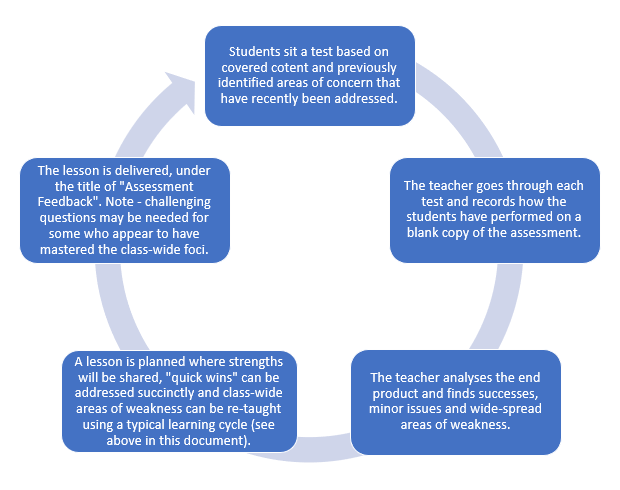
I wrote in the “don’ts” the ways you shouldn’t feedback to an exam, here’s how to do it well.

Revision is hard and effective revision can sometimes be counter intuitive. Teach them how to revise. For more on that, see this blog.

It is so tempting to feel the need to drastically change things up as exam seasons gets closer and closer. It is your job, ultimately, to still teach students how to do things they cannot do. This has been your job all through the year with every year group you teach. Hold fast and carry on doing the same thing. Keep the balance of modelling and practice. Keep the balance of checks for understanding and responsive teaching. The only thing I can see a good argument for changing is the ratio of time spent retrieving content, simply because by this point there is so much more to retrieve. It can be hard to resist the urge to change things up but if you believe you’ve been doing a good job for students the rest of the year, there is nothing special that needs to happen. Hold fast. Stay the course. You got this!


Teaching Mixed Attainment Maths at KS3

Advice on how mixed attainment maths at KS3 can work

I am both a big advocate for and against mixed attainment maths teaching at Key Stage 3. When done right I believe it is better both academically and ethically for the children. I know it can work, I’ve seen it work, I’ve been the Head of Department of a school that taught mixed attainment maths in KS3 and got some of the highest progress scores in the country. I have no doubt it can lead to incredible outcomes. The difficulty comes in “doing it right”. It takes A LOT to do this. And the risk of not getting it right I believe is greater than when teaching more homogenous groups. It’s a high risk high reward strategy.

What worries me is that people may make the ideological choice to move to mixed attainment teaching, or they may do so for some other logistical reason (staffing, timetabling…), and although it may be worthwhile in the long run, if it isn’t implemented right in the short-term it can be detrimental to all involved. Staff can be overworked when suddenly shifting to a whole new pedagogical approach and students end up receiving a worse education than they were originally. In the worst cases this is not only done without consulting the maths team, it is done against their own desires. Whilst it might be OK in a few years, there is an initial cohort of both teachers and learners who suffer needlessly in the immediacy.

Maths is innately more hierarchical than most other subjects and the decision to teach it in mixed attainment groups must be deeply considered by school leaders.

Below I want to go through some of the key principles that I have seen and used that have made it work in practice. These often are not things which can be implemented overnight.

The key points I’m going to speak on are:

  • The curriculum
  • Early intervention
  • Atomisation
  • The well-worn path
  • Effort over attainment
  • Means of mass participation
  • Explicit instruction

Curriculum A rising tide lifts all ships

One of the biggest issue in mixed attainment maths teaching is students not having the pre-requisite knowledge to engage meaningfully in things their peers can. The department should still endeavour to teach the entirety of the KS3 curriculum but this needs to be done over 3 years. They should ensure that none of the topics that sometimes “leak” into Y7-9 from KS4 appear (factorising quadratics, solving simultaneous equations algebraically, index laws…). The scheme of work needs to go back to basics and build up slowly. It should start with numeracy and the basics need securing and mastering.

There are plenty of rich activities which can be used to both challenge students whilst helping others practice. If some students need “stretching” then exercises should go deeper rather than broader with the key concepts being taught. It is impossible to perfectly cater for all students all the time.

Teachers should be secure in the knowledge that, over 5 years, students will encounter all the content they need to get 100% in their GCSEs. They shouldn’t worry about holding a few students back in the short term for the betterment of all in the long run. Holding some students back to ensure all can access the content is better than the converse of letting some fly whilst others never master the basics. My second in department used to routinely remind me that “a rising tide lifts all ships”.

Early interventionBuild on solid foundations

Linked to the above, if there are students who join you in Y7 who cannot access the beginning of your course due to weak numeracy then you need to intervene. This should be a relatively small number of pupils. The culture around intervention needs to shift from happening at the end of Y11 to the start of Y7. Intervene early. Either employ or upskill staff on the teaching of Ks1-2 maths and put all the effort you would put into Y11 in the run up to their GCSEs into identifying and addressing serious gaps at the start of Y7.

This is the strategy that all schools should be using anyway, since if you sort the basics out then students will spend the rest of their time on the course building on solid foundations.

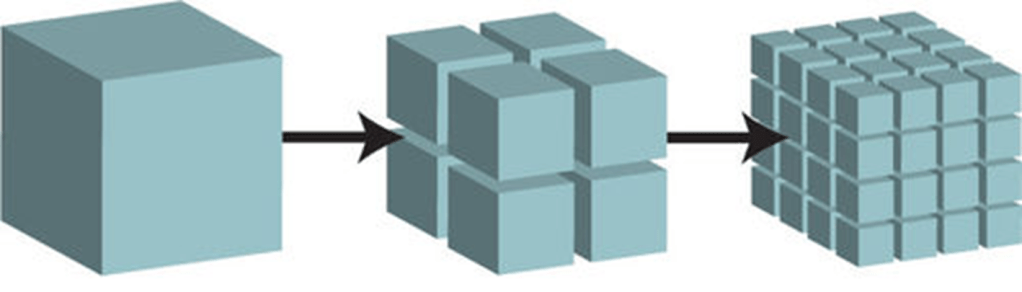
AtomisationBreak it down and build it up

Before teaching any new concepts teachers should go through a rigorous process of “atomisation”. Of breaking the concept down into the component parts that make it up. They should go through the list and decide what they can safely assume students know, what is essential to master this new concept, and what might be a “nice to have”. All of the essentials should be checked or reintroduced in the lesson prior to teaching the new content.

When it comes to teachers deciding what students may already know it is always better to underestimate than overestimate. If you underestimate then you only risk wasting a minute or two whilst you check for understanding and realise students can do it. If you overestimate, you risk tying yourself in knots later in the lesson and having students leave without grasping a thing. Whatever new concept you are teaching, break it down and build it up.

Well-worn pathVisit everyone but do not give them all your time equally

Do a well-worn path; this is a technique to be used whilst students are working independently. It involves mapping out a route around the classroom in which you can have eyes on every student’s work. As well as using it to check all necessary accessibility arrangements are in place (glasses, readers, dictionaries…) you can use it to check everyone’s work. It is worth starting a lap visiting your highest attainers first. These are a good proxy for any serious misunderstandings since if they are stuck it is likely everybody is and you can bring everyone back together. It is worth ending your lap with those who often require the most help. This is so that you can help them AFTER you’ve briefly touched base with everyone else.

It is OK to spend more time with some students than others. It is also OK, if there is a TA, for them to not always work with those who need the most help as the teacher may be better placed to intervene effectively. We are not aiming for equality but for equity. That involves visiting everyone but not giving your time equally.

Classroom culture Praise effort over attainment

Maths undeniably has a PR problem. Some (most?) students will, by the time they start in Y7, already have a pre-conceived idea of how much they can achieve in maths. It’s important to build a culture where all students believe in themselves, perhaps more so in a mixed attainment setting where some will be doing maths alongside peers who are much more confident than themselves.

Take the time to praise the right behaviours that students exhibit. The peak-end rule suggests that what happens at the end of the lesson will really stick with students. To leverage this, end on something attainable, you shouldn’t be finishing your lessons with the hardest content. Treat your lesson like an exercise class and end with a warm down, not a sweat-fest. Make sure they leave feeling successful. Catch those most vulnerable doing good early on the lesson and make them feel great. In every interaction ensure that you are praising effort over attainment.

The final two are kind of cheats because they don’t apply specifically to mixed attainment maths teaching, I think they just apply to all teaching, but it can often be the case that people don’t think they do apply in this setting so I just wanted to make the point that they most certainly have a place.

Means of mass participationwho cares if less is in their books if more is in their heads

You need to have a system set up in the lesson to ensure that, as much as possible, everyone is ACTIVELY participating for as much of the lesson as they can. Mini whiteboards are the obvious (and best I’ve seen so far) solution to this. When checking pre-requisite knowledge, why ask one student when you can ask everyone? This is especially important in a less homogenous group where gaps and misconceptions can be harder to predict.

When it comes to students working in books it is nearly impossible to see everything that is happening. If more questions than usual are completed together (but still independently) on mini whiteboards then the teacher can be sure that if the need arises for students to work in books or on a sheet or something that they will be able to do so without embedding any misconceptions or being stuck. Remember that practice doesn’t make perfect, it makes permanent. Also remember that it shouldn’t matter if there is less in their books at the end of a lesson if there is more in their heads.

Explicit instructionall the principles of effective teaching still apply

A common misconception that I see is the idea that mixed attainment teaching is not compatible with explicit instruction. This is far from the truth. It can be tempting to think that with so many different starting points in the room tasks need to be really open or many tasks need to be available. This simply isn’t the case.

When mixed attainment teaching either hasn’t been very effective for a few years or starts at once in Y8 or Y9 it’s easy to see how this conclusion is reached. With all of the above in place though, you can start from the ground and build up remembering that all the principles of effective teaching still apply.

Things to definitely avoid

As well as doing all of the above, here are some brief “do nots”:

  • Do not start mixed attainment teaching at KS3 all at once, begin at Y7 and build it up
  • Do not start it and THEN put the CPD in place, get the CPD sorted first then make the switch
  • Do not do this TO the maths department, do it WITH them

The end and the future?

I sincerely hope that mixed attainment maths becomes the norm in the future but this is not a change that can happen quickly and I fear that we are putting more and more staff off it at the moment due to poor implementation. If the above ends up being of any use, I’ll be a happy man.

I’m always interested in what people make of this so please feel free to comment with thoughts, questions or incomplete musings. Follow this or my Twitter account Teach_Solutions for similar content in the future. Also, check out the rest of this site, there’s some good stuff knocking about the place.

Beware the Ends of Branches

This post looks at certain topics which are often neglected when it comes to retrieval, why that happens, and what can be done about it.

Let’s start with a quick question. What seemingly accessible topics in your subject do students never seem to be able to remember?

In my subject, this is an easy one. Ask any maths teacher and their list will most likely include:

  • Loci
  • Constructions
  • Congruency
  • Simultaneous Equations
  • Cumulative Frequency Graphs
  • Averages from a table

Retrieval

Retrieval, retrieval, retrieval. It is a necessary part of learning (remembering?). Learning, not just performing, does not happen when something is seen once and then never again. You need introducing to something, you need to almost forget it, then you need to rescue it from your mind before it fades away just in time to keep it in your head for that little while longer.

In mathematics, some topics are naturally retrieved. With no effort from the teacher they will recur again and again. If we take solving two-step equations as an example, once taught as a discrete topic, it will rear it’s cheeky head when students move onto:

  • Forming and solving equations
  • More complex linear equations e.g. three step or with unknowns on both sides
  • Simultaneous equations
  • Quadratic equations

If we take basic angle facts, these will reappear when moving onto:

  • Angles in parallel lines
  • Forming and solving equations
  • Certain ratio problems
  • Angles in polygons
  • Circle theorems
  • Bearings

Why does this matter?

Retrieval, retrieval, retrieval. It’s just so important in embedding content, it means that the ideas above that recur are more likely to be learnt (remembered?).

A Curriculum Tree

If we imagine a tree of maths knowledge representing a curriculum. In this tree, the core ideas which appear everywhere form part of the sturdy trunk. Let’s imagine branches grow from pre-requisite materials, these more fundamental ideas mentioned above would form some of the more solid parts which would have many offshoots. As we track any branch to its end, you would find a topic that is not needed for any other topic for that curriculum.

The closer a topic is to the trunk the more naturally it will be retrieved. The topics at the end of the branches, however, are not going to naturally be retrieved whilst going through a curriculum. This is a problem. Why? Because retrieval, retrieval, retrieval, is so important to remembering (learning?).

Ends of the Branch

Because of how important retrieval, retrieval, retrieval is to learning (remembering?) we need to pay special attention to the ends of the branches. These will not recur naturally so we must find ways to force them into the curriculum. Most schools in the UK these days achieve this at the start of the lesson with some sort of retrieval activity. I think this is a great idea. Without revisiting content regularly there is a risk of it not being remembered and the start of the lessons seems a better place than most in which to do this.

It follows (if you believe all of the above) that the topics at the ends of the branch need special care and attention when designing these retrieval tasks. Beware the end of branches!
This all seems simple enough. Problem solved, right? Well, hold up a second.

There are some topics that, for various reasons, just complicate things.

I see hundreds of lessons a year and am yet to see a retrieval starter in which students need to recall loci or constructions, and very few where they retrieve cumulative frequency graphs, averages from a table or simultaneous equations etc. Does that list look familiar? (Don’t worry if you’ve forgotten it, we haven’t retrieved it yet), but it’s the list that we started this post with.

There is an uncanny crossover between what I do not see retrieved and the seemingly accessible topics that teachers will proport students struggle to remember. Could it be that it’s because students are not asked to retrieve this content as often? I would say so.

It’s perfectly understandable that this happens though. Nobody wants to spend the beginning of their lesson retrieving loci or constructions because it will inevitably lead to chaos as students do not have the necessary equipment.

Cumulative frequency graphs and averages from a table questions will require printing which is logistical barrier.

Simultaneous equations and congruency questions often require so much writing they may not fit into a snappy 5-minute starter routine your school so heavily insists on.

Solutions

If you or your department uses starts of lessons in this way then please beware the ends of branches. Not all of them, but those which require that little extra consideration. These can be easy wins but without putting in that extra effort every now and then to ensure students retrieve these topics, they are doomed to be forgotten (not learnt?).

Remember:

  • Take time to mark out explicitly when teachers should be reviewing these
  • Have some pre-prepared printable sheets ready
  • Have a class-set of equipment on standby for certain weeks
  • Be ready to (justifiably) take that little bit longer on the starter

Without taking special care, some branches will never be able to blossom.

I’m always interested in what people make of this so please feel free to comment with thoughts, questions or incomplete musings. Follow this or my Twitter account Teach_Solutions for similar content in the future. Also, check out the rest of this site, there’s some good stuff knocking about the place.

Teach Them HOW To Revise

A summary of revision tips for teachers to use with students.

In the run up to exams students should be spending about as much time at home revising as they spend in school working. That time is valuable. It adds up so much that it is worth spending some of the time in school to ensure that students actually know how to revise so they don’t fall into any bad habits that waste their time.

Here are things we can do as teachers to ensure the time they are spending revising independently is as effective as possible.

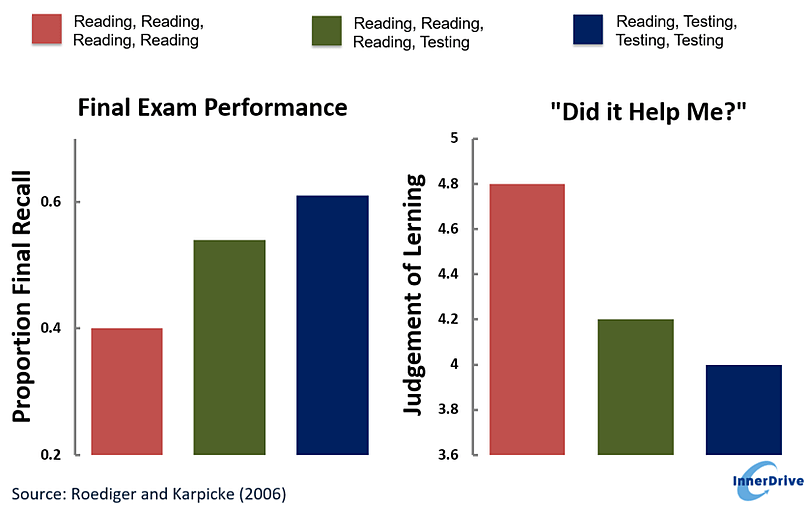
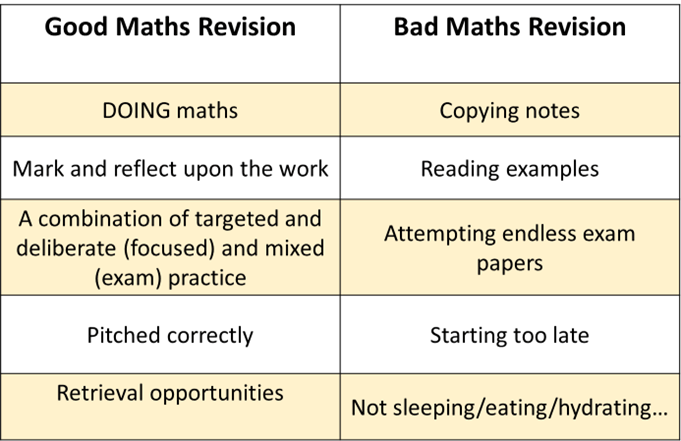
  1. Let them know that ACTIVELY revising is going to be far more effective than PASSIVELY revising. Passive revising includes things like reading, highlighting, copying… and is not a great use of their time. Think of an analogy of working out at the gym; if their head isn’t hurting at the end of revision session, they aren’t doing it right.

2. Don’t overload students with resources. Giving them too much at once is not a kindness. This can be overwhelming and less work can end up being done compared to if a smaller, more accessible task was handed out. Keeping revision simple, one online resource, one workbook, one paper at a time can help.

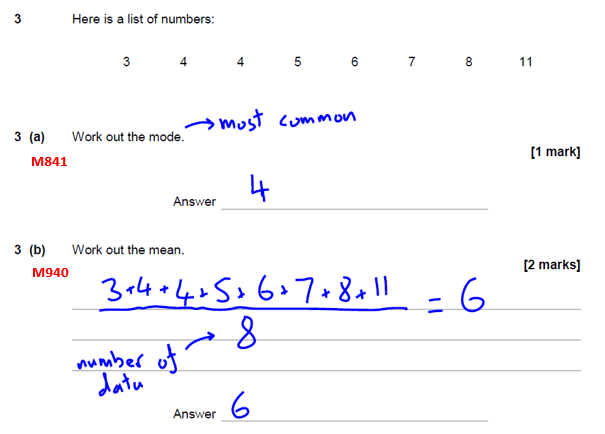
3. Give students model answers instead of mark schemes. Mark schemes are hard to read and interpret. As a department, creating model answer papers with hints or links to online resources (example below uses Sparx codes), will be of much more use than a hard to read mark scheme.

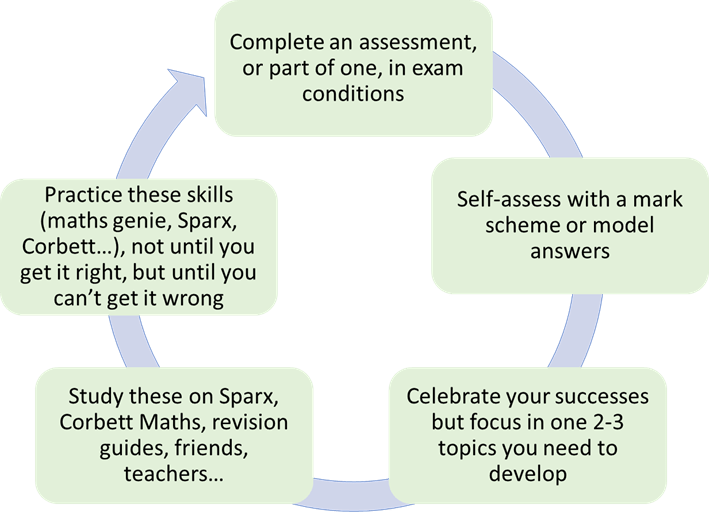
4. Teach students HOW to use a past paper, these are a precious resource and using them well is hard. Make sure they know that simply DOING a past paper is of little benefit if they don’t reflect on their strengths, learn from their mistakes, and act accordingly.

5. Teach students what good and bad revision looks like.

6. Remind students of the importance of sleeping, eating and creating a focused environment. This is all just as important as the task itself.

Any more to add? Please comment below.

I’m always interested in what people make of this so please feel free to comment with thoughts, questions or incomplete musings. Follow this or my Twitter account Teach_Solutions for similar content in the future. Also, check out the rest of this site, there’s some good stuff knocking about the place.

Department Handbooks

If you were thinking this swanky site was just built to hold a selection of dis-connected blogs, you’d only be 90% correct. There are a couple of things of actual use too.

One of those things is a Maths Department Handbook that I put together. When I was Head of Department I was lucky enough to have no staff turnover. This meant that building something over time was easier to do. Trying to do this in the current climate, without a handbook, I think would be nearly impossible.

With the current rates of turnover, leading training one day means there is no guarantee of that idea or initiative still being in place a year later unless it is captured somewhere. This is where a handbook comes in.

Unfortunately they are incredibly time consuming to produce. Certainly in the first instance. Adding things afterwards, less so, but the initial investment to make one often involves time that people just don’t have.

When I started as a HoD, the department had a progress score of 0. This was increasing each year by about 0.4. I left in the year of the TAGs but in the first validated set of results, 4 years after I started, the department managed a score of +1.77. I say this just to help lend an air of credibility to the document and its contents.

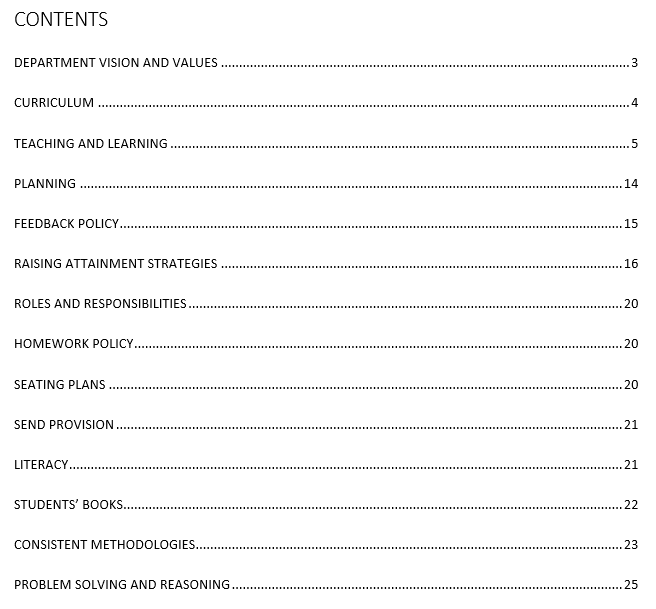
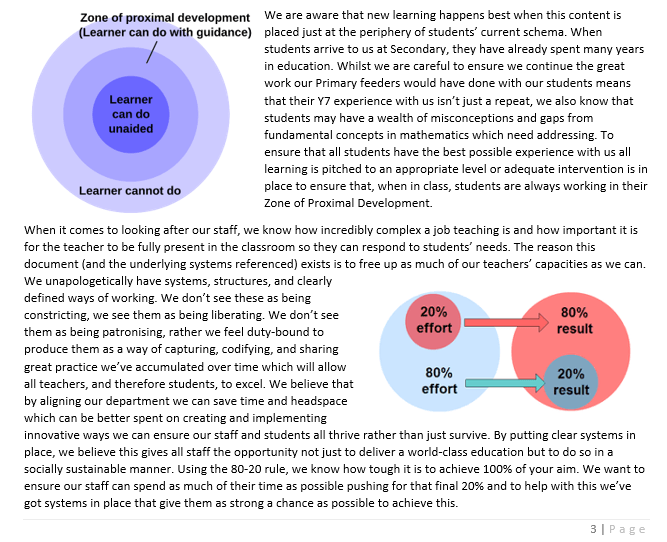
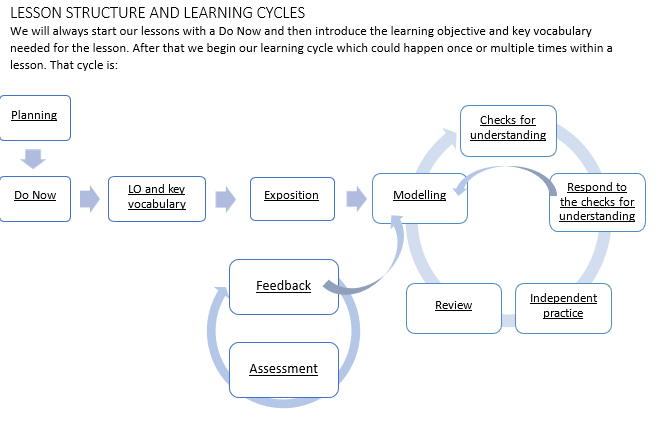
I’m no longer a HoD but I recently had the time and created a handbook. I tried to capture lots of the things we did and lots of the things I wish we’d have done in my old department. I want to provide you with an editable version to either read or to use as a basis for your own. I hope there are some ideas in there that might be new to you and that you learn something from but most of all I hope it saves you some time.

It is the first link the “Documents” part of this site which you can either get to by clicking the link or through navigated the site yourself.

Here are a couple of snippets from the handbook so you get a sense of what’s inside.

Hope it helps!

I’m always interested in what people make of this so please feel free to comment with thoughts, questions or incomplete musings. Follow this or my Twitter account Teach_Solutions for similar content in the future. Also, check out the rest of this site, there’s some good stuff knocking about the place.

Marking Maths: It’s Either Right or Wrong. Right? Wrong!

Looking at how maths marking is harder than people think, why it’s important and what can be done about it.

“It’s either right or wrong” isn’t it? Well, is it? No, I don’t think so. It isn’t? No, it isn’t. It’s more than that? It is. How do you know? Here’s how.

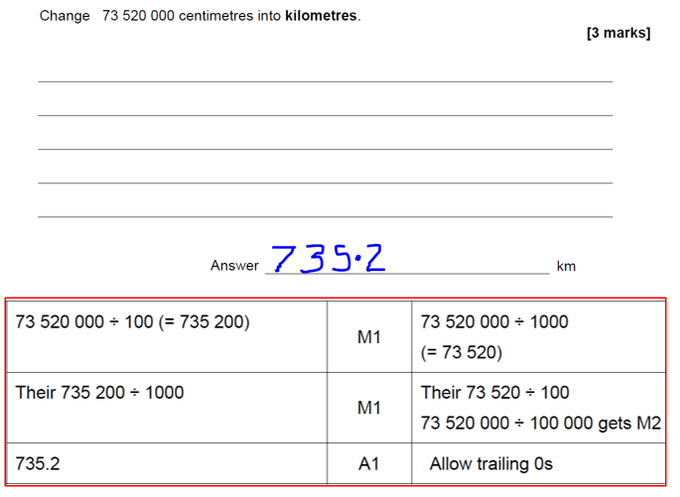
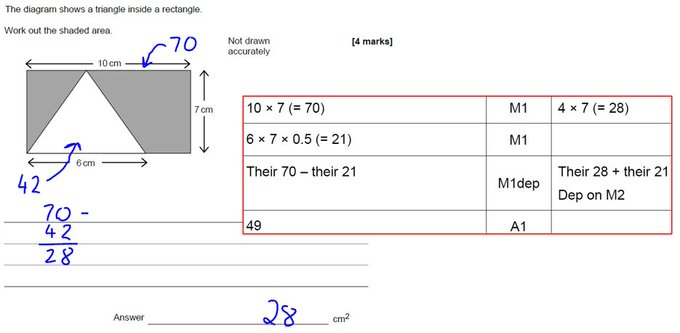
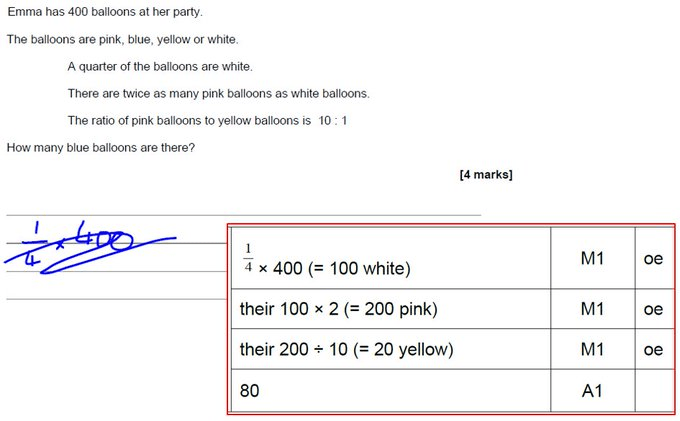
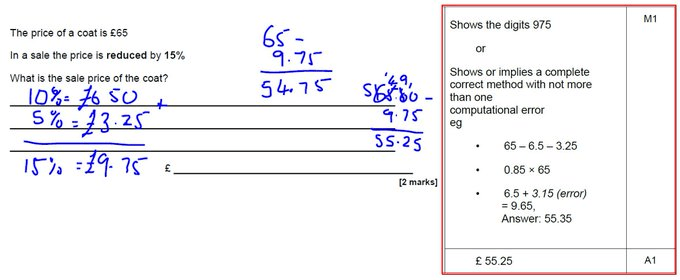
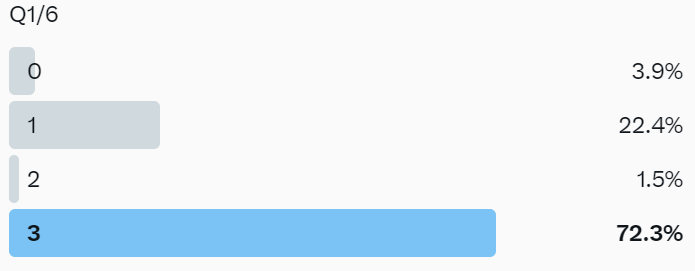
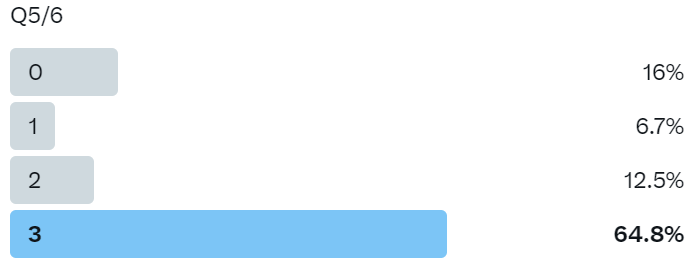
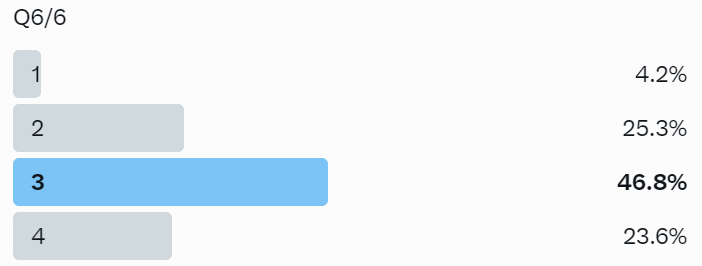
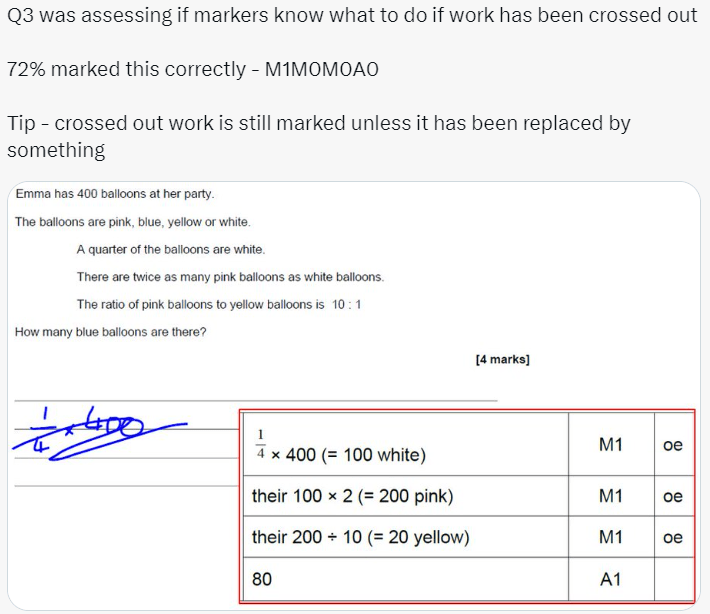
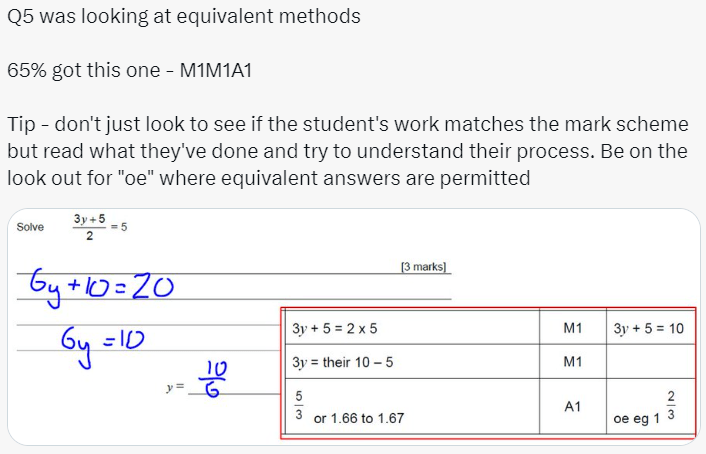
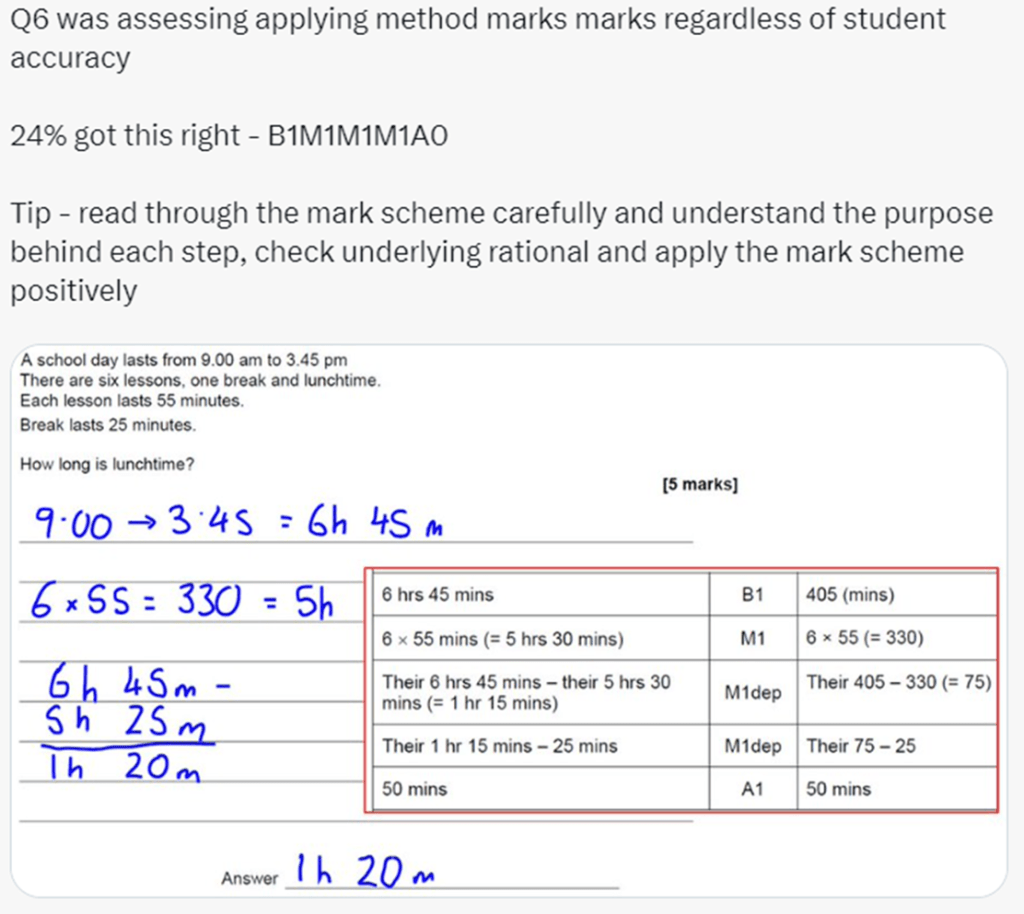
On Twitter, when it was still called Twitter, I put 6 mock student responses to questions up alongside the mark scheme. Underneath each was a poll that captured the marks people would award the student. Here are the questions and results. I’ll put the questions first so if you want to play along and mark them yourself without being swayed, feel free. The results are after. Note that the answer highlighted in blue is just the most common response, not necessarily the correct response. The correct responses will be looked at near the end of this post. Each was answered by about 2,000 people.

Question 1:

Question 2:

Question 3:

Question 4:

Question 5:

Question 6:

Poll results (answer in blue is not necessarily correct, just most popular):

I have done this exercise, or similar, with teachers and every time the results are about as varied as this. It shows, fairly conclusively, that marking a maths paper is not as simple as some might think. Let’s go through why this is important and what can be done about it.

Why is this important?

No matter what your philosophy of mathematics teaching is and regardless of what you think about exams etc, it is hard to argue that we are doing students a disservice if we don’t prepare them for their exams. A small but crucial part of this is exam technique. If teachers don’t know what does and doesn’t give you marks and, maybe more importantly, what you can and cannot be penalised for, then two students who know the same amount of content, can get different grades due to how well their teacher has prepared them in the technicalities of how the paper will be marked.

What can be done about it?

First of all we should acknowledge that there is an issue here. Yes, maths papers may be quicker to mark than others, but it doesn’t mean they are easier to mark. There is a page in every GCSE mark scheme that often gets ignored. It is maybe the most important page in the whole document. It outlines the underlying principles that should guide the examiners marking as they go through the paper. It decodes what all the letters mean and gives overarching advice applicable to every paper.

CPD Resources

If you want to test yourself, I made some resources. They consistent of an exam paper with mock responses and an MS Form where you can input the marks you have awarded the student. The Form will give you your score, not the score the student got, but a score of how accurately you marked the paper. This paper has been completed many times already and there is an Excel doc which has collated all the misconceptions that teachers have had when marking the paper. There is advice in there which can not only be taken forward when marking in the future but which can be shared with students as a way of increasing the marks they may achieve.

Here are the correct responses for the 6 questions used above along with the reasons why:

Here are links to the resources mentioned above or you can find them in the documents part of this site.

As a HoD or Curriculum Lead in a school this could be a good activity to check the quality of marking in the department. As an individual, you could just use this to test yourself. As a non-maths teacher, you can just use this to appreciate some of the finer complexities we have to deal with.

I’m always interested in what people make of this so please feel free to comment with thoughts, questions or incomplete musings. Follow this or my Twitter account Teach_Solutions for similar content in the future. Also, check out the rest of this site, there’s some good stuff knocking about the place.

Comic Strips

Comic strips in the maths classroom and 5 ways they can be of use.

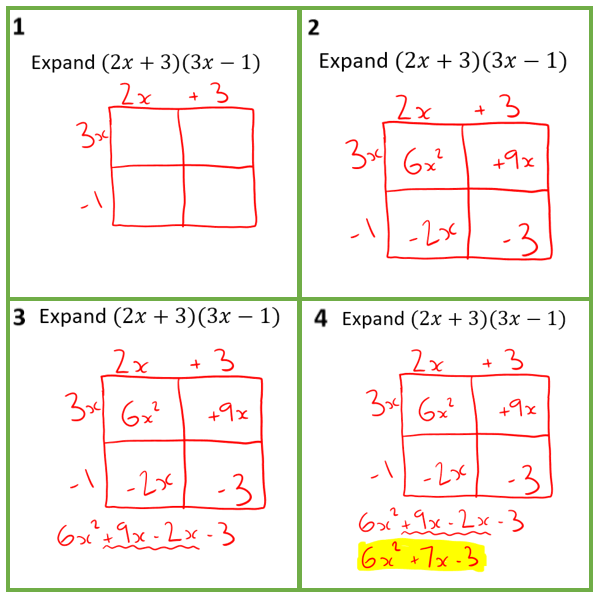
When reading left to right it’s relatively simple to see how something has been created and, if tasked to replicate it, that would be a simple task. Very often in maths, we do not read left to right. This can mean that, once an exemplar has been created, it can be hard to see just how to recreate the process. Numbering steps is a solution but often a tricky one to do clearly. Comic strips however, can be incredible useful.

I want to show you three examples of these quickly so we all know what we’re talking about and then discuss a few ways they can used in the classroom.

Here’s one for creating an angle bisector:

Here’s one for expanding two brackets:

Here is an amended version of the previous with only the new content in red:

5 Ways these can be used:

1. For Reference

Simply show them to students either capturing electronically, producing live or sharing a Blue Peter “here’s one I made earlier” version with students once you’ve modelled the process. This can be shown on a board or printed for students to refer back to during the lesson. Obviously, if printed you run the risk of them becoming overly reliant on this piece of scaffolding but I will leave those choices up to you.

2. Variation Theory

Having these as a resource when looking at two different questions can be interesting. Comparing them side-by-side and looking at what is the same and what is different can help highlight underlying structures.

3. Questioning

Having students replicate the process step-by-step and then checking for understanding at each stage or asking questions that explore the “why” behind each stage can be useful.

4. Disciplinary Literacy

Exploring what the “caption” for each stage could be using academic vocabulary can help increase the levels of literacy in the room. It can also force students to use concise and accurate vocabulary.

5. Student Task

Having students create their own comic strip is a useful exercise which can help draw their attention to the key steps in the process. This might be best suited once the process has become fluent and you want them to think metacognitively about what they’ve been doing.

End

I hope you have fun exploring their use in the classroom. I think these are relatively simply to create, simply solve one question but take a screenshot or photo at each stage before building upon it. Try it out, in my experience it can be of huge benefit to students for certain topics.

I’m always interested in what people make of this so please feel free to comment with thoughts, questions or incomplete musings. Follow this or my Twitter account Teach_Solutions for similar content in the future. Also, check out the rest of this site, there’s some good stuff knocking about the place.