Behavioural Economics – An Untapped Goldmine for Education?

An exploration of what behavioural economics may be able to offer education; not in contrast to cognitive science, but complimentary to it.

No one quite knows when it started, but for a while now cognitive science has been ever-present in discussions around best teaching practice. If you accept learning to be a change in long-term memory (which even if you don’t it’s hard to argue that it doesn’t have a vital role to play) then all of a sudden this huge bank of research looking into memory and how that part of the brain works is useful.

This blog warns about the dangers of treating cognitive science as a “catch-all” for teaching and asks if there is another domain out there, an unexplored goldmine, ready to shed light on some pedagogical aspects that cognitive science does not cover.

Power of a Shared Language

Ideas around retrieval practice, interleaving, interweaving, dual-coding, explicit instruction, schema, cognitive load… all originate in the realm of cognitive science. These are all great things which have had a huge benefit on education recently for many reasons, not least because simply having a shared language is a powerful thing.

All the ideas above have been written about A LOT. The power of a shared language has allowed teachers that did those things anyway to talk about them more succinctly. It allowed a community to experiment, tweak and innovate all these ideas and apply them to the classroom in the knowledge they were all working on the same thing. It allowed people to codify aspects of teaching and break it down into discrete parts that allow it to be explicitly taught. The ability to talk about an idea without having to show someone it is a powerful thing.

Cognitive Science – Necessary but not Sufficient
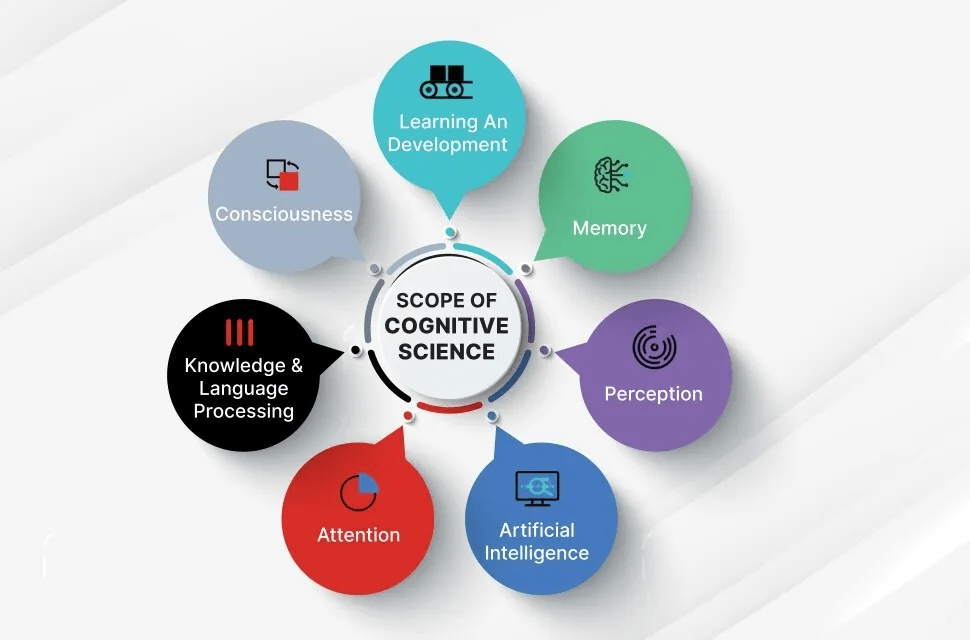
Cognitive science is not a panacea, it focuses very inwardly on the processes of the brain. By and large, its studies of how learning happens are done in isolation, in a lab. It misses out a massive part of the realities of teaching, namely, that most of the time it happens in a room full of not 1 but 30 brains. Each of those is living inside messy, illogical, hormonal, confused, unique, incredible, frustrating, funny, brave, unpredictable, bored, inspirational, exhausted humans.

Cognitive science does not exhaustively cover what it takes to be a teacher – not even close; in its defence it has never claimed to, but I do worry about increasingly seeing teaching practice becoming synonymous with cognitive science.

It is a necessary but not sufficient component of education. Its effects will only work if all your pupils are motivated to engage with the content in the first place. That sounds simple enough but behavioural issues are often the biggest barrier teachers face in their delivery of content. No matter how well you know their brain should work in theory, if you can’t get them to engage with the content in the first place it will be, inevitably, ineffective.

Some Unanswered Questions

Some examples of common issues teachers have that cognitive science cannot solve are:

  • why do they make silly mistakes when they actually know the answer?
  • why don’t students try their hardest on a test despite wanting to do well?
  • why don’t they revise when they know it is good for them?
  • how do I win a class back that I feel I’ve lost?
  • how should I end my lesson?
  • how do I get them to behave?
  • how do I get them to do their homework?
  • why do they make bad choices despite seemingly wanting to learn?
  • how do I get them to work on a wet and windy Wednesday?

So does it exist? Is there something which has been studied for decades which contains the tools, tips, and shared language we need to tackle things like the questions above? Something which could be the starting point of a new shared language which could codify and share some of the great practice that already exists? Well, I think it does.

Behavioural Economics
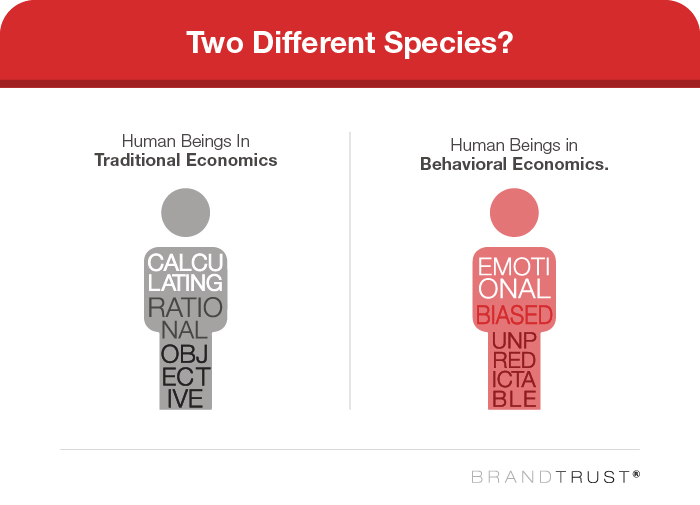
Cognitive science is to learning as behavioural economics may be to behaviour for learning. If you think there isn’t as much or more to be gleaned from behavioural economics than there is from cognitive science then let me try and convince you with the below.

As you go through these, see if they resonate with problems you have experienced. Imagine there being as many books written about their application to education as there are for cognitive science. Imagine having a shared language so people can talk the same language around these things, develop strategies on the same issue, talk concisely to each other about known problems. Imagine these ideas being researched to see what effect there is on learning. Then imagine the power that could have on the educational landscape.

I’m going to introduce 8 ideas, explain them, and discuss implications they could have in the classroom. This is just the tip of the iceberg though. Both in terms of the concepts out there and how the ones mentioned could be used for by schools.

1/8 System 1 and System 2 Thinking
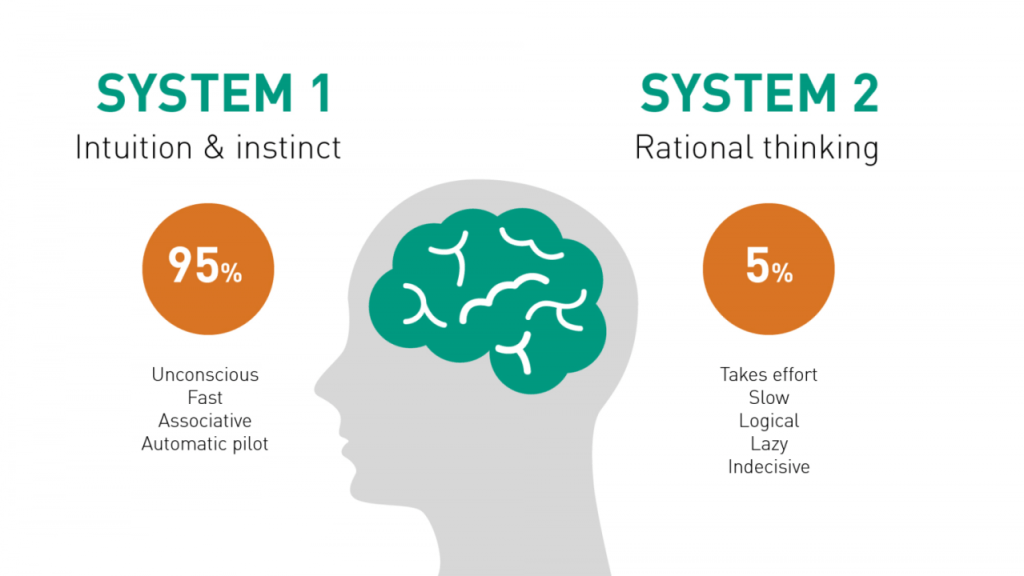
Making students (and staff) aware that humans spend most of their time on autopilot is vital. If you haven’t come across system 1 and system 2 thinking then look into it. It has so many implications for the classroom.

A typical question used to highlight the issues with system 1 thinking is the bat and ball question:
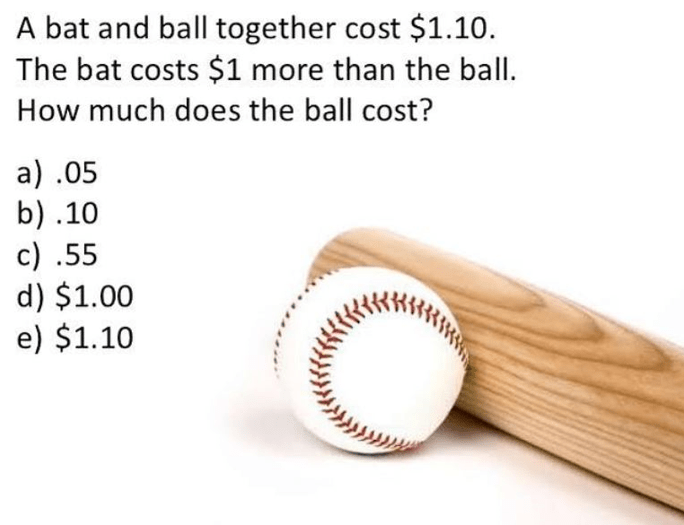
The first time people see this question it is almost impossible to think the answer is not $1.00. A quick bit of maths however shows you that it can’t be the case. What’s happened there? Well, your system 1 brain has chosen the most intuitive answer without doing much thinking about it. System 1 thinking is quiet but susceptible. Forcing students out of this mode is vital to getting the best out of them.

What if I told you this next question is designed to trip you up? It is designed to be as deceptive as the first question:

I’d bet any money this question would have a higher success rate than the first. I also think this would happen regardless of the order the questions were presented. The important thing is that you were jolted out of system 1 thinking and switched to system 2. All by yourself. Imagine harnessing this with students!

2/8 The Peak-End Rule
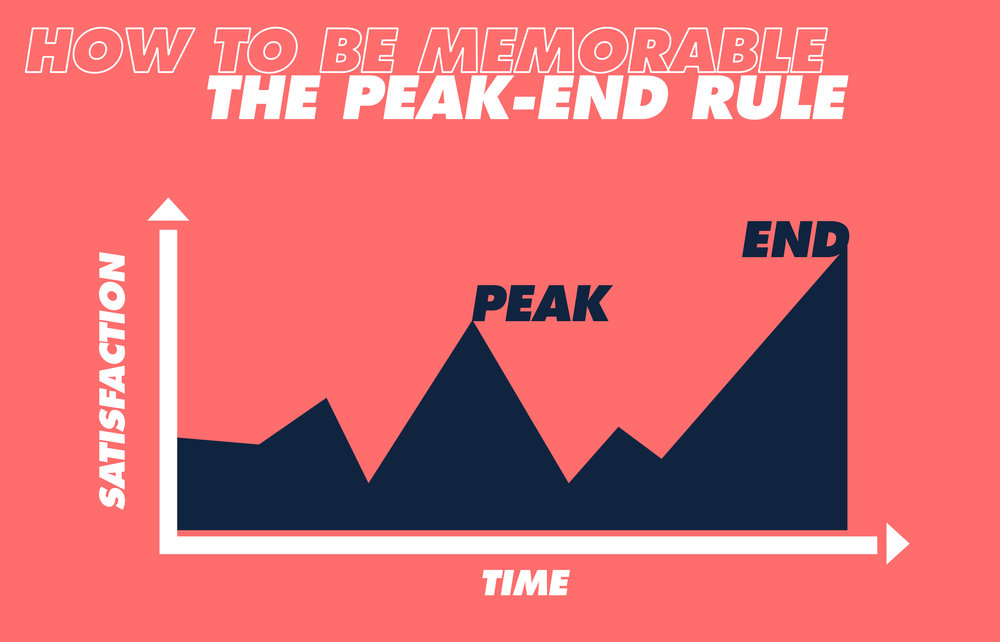
In an episode, there seems to be two main moments that stick in people’s minds. The emotional peak (the most intense event during the episode) and the end of the it. If there was ever a reason to really think hard about how your lessons end this would be it. The rule states that how students feel about themselves in relation to your subject is going to be heavily influenced by how they feel at the end. If you are always ending your lesson with the hardest content, what effect might this have? Conversely, if the lesson ends purposefully, with praise being shared and an achievable question being asked, what effect might that have?

3/8 Self-Handicapping
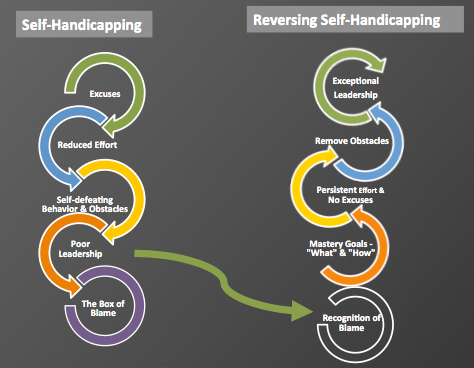
For all sorts of reasons, humans do not always try their hardest. Deliberate self-sabotage to save face, reduce the effort needed, have excuses for poor performance… is a known phenomenon. Knowing this is the first step to tackling it. Talking about it with students and giving them the language to discuss and address unhelpful tendencies can sometimes be enough to change behaviour.

4/8 Recency Bias

Humans are much more influenced by what has happened more recently. A gambler who has won the last 3 rounds but lost the previous 10 is much more likely to believe they’re doing well than someone who won the first 3 and lost the next 10.

This could have a lot of implications in the classroom but one I think that could be particularly useful is in thinking about how to affect change on a class that you think you’ve lost. Knowing that the last few lessons are going to influence their perceptions on the class much more than anything that’s happened previously should give hope to it never being too late to turn things around.

5/8 Short-Term over Long-Term

Humans are much more concerned with short-term benefits than they are with long-term ones. Students may well want to do well in their exams, they may also know exactly how to revise, putting these two together when their exams are a long way away is not a given though. Creating short-term rewards where you can to encourage motivation may not only be sensible, it may be necessary.

6/8 We Want to Fit In

The desire to fit in can overrule the desire to do what you think is right in the moment. Knowing that if poor behaviour gets the spotlight in the classroom than it may encourage more to join in rather than the desired effect teachers are often hoping for which is to detour it.

7/8 Anchoring Effect
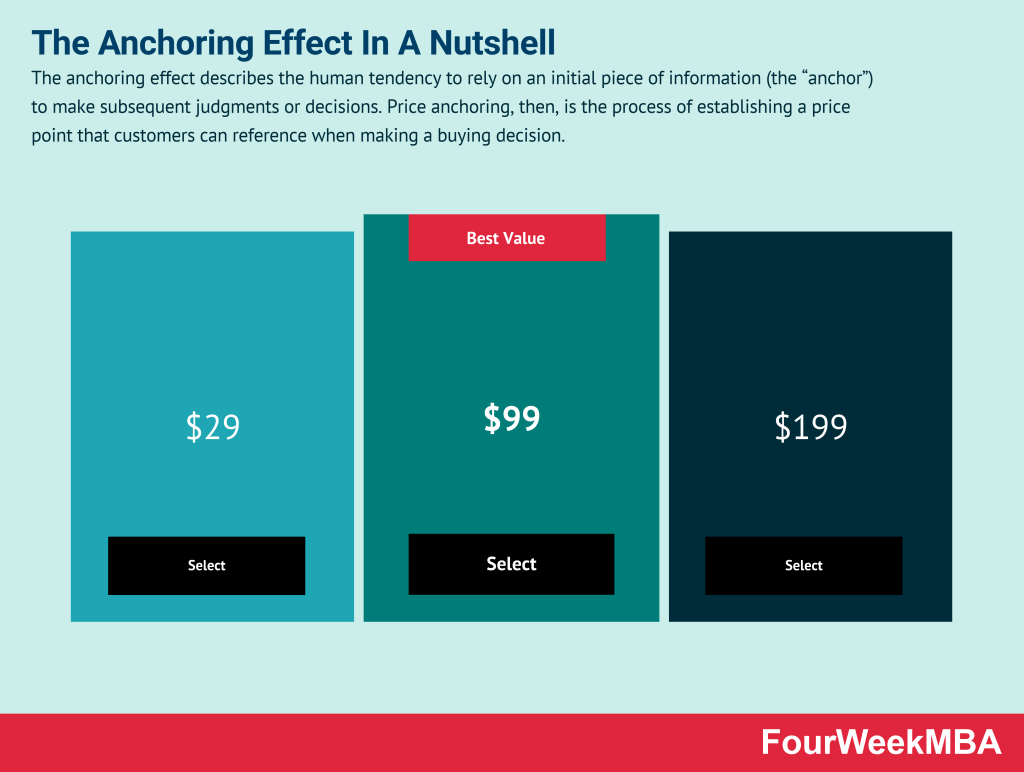
If you want something to be appealing, have something to compare it to where it looks favourable. The typical example of this is popcorn prices at the cinema. They are all ridiculous but buying a large for £5.80 suddenly seems attractive is a medium costs £5.40. Imagine a cold dark afternoon where you want students to complete 20-mins of work independently. Why not give them the choice between that and 30-mins wort of work independently. All of a sudden that 20-min task makes them feel like winners.

8/8 Availability Heuristics
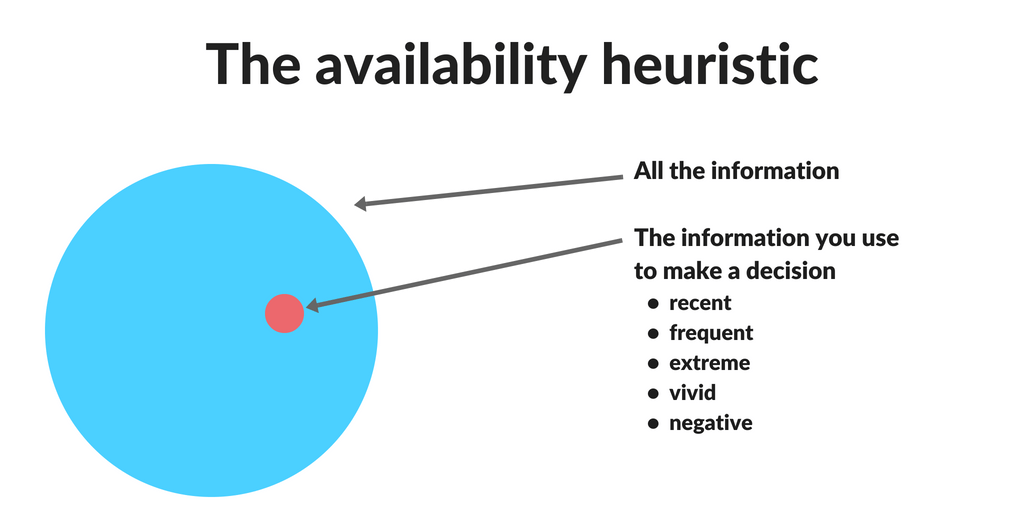
Humans, it turns out, are really bad at making decisions. If we start to combine ideas like system 1 and system 2 thinking and recency bias you get the begins of ideas like availability heuristics. The notion that we tend to only make decisions based on immediately available information rather than all the known information. Front loading expectations and consequences may then help shift behaviour patterns to be more desirable. Moving to a more proactive rather than reactive behaviour management style can help stop issues before they even begin.

Summary

I hope that at least some of the 8 ideas above resonate with people’s classroom experiences. I think that there is an untapped goldmine of research that is waiting to be applied to the classroom and I can’t wait to explore these ideas further in the future. Cognitive science is incredible for making sure an engaged individual is learning well, behavioural economics may be necessary to ensure that engagement is there in the first place.

I’m always interested in what people make of this so please feel free to comment with thoughts, questions or incomplete musings. Follow this or my Twitter account Teach_Solutions for similar content in the future.
Go-To Guides

What could a booklet that contains all the pedagogical subject knowledge one might need for a topic look like?

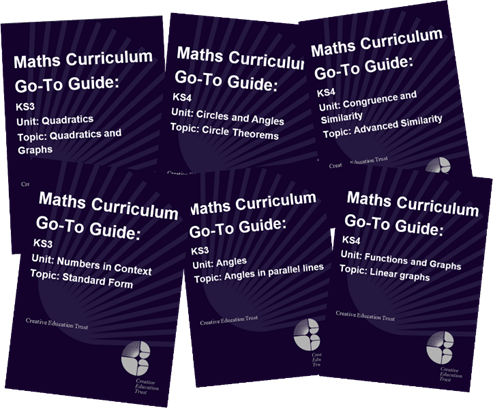
When I first starting teaching, I was given little else to aid my planning than a list of objectives from the National Curriculum and a number of weeks with which to cover the content. It’s safe to say that this was not enough to adequately prepare my students. Since then, I’ve been struggling to know the best way to prepare new teachers for all the things they need when approaching something for the first time. In an attempt to address this, the Go-To Guide was born.

Introducing the Go-To Guide

Inspired by the wonderful Pav Aujla (a Trust Lead for Science) who had produced booklets to share knowledge across multiple schools of what needed to be taught and when under the name of a Go-To Guide I thought I would give it a go for maths.

There are so many more things beyond just a list of objectives taken directly from the National Curriculum that are needed to prepare someone to teach content well to a group of students. These guides are not lessons but sit in the void between the curriculum and lesson delivery that sometimes does not get nearly as much attention as it deserves.

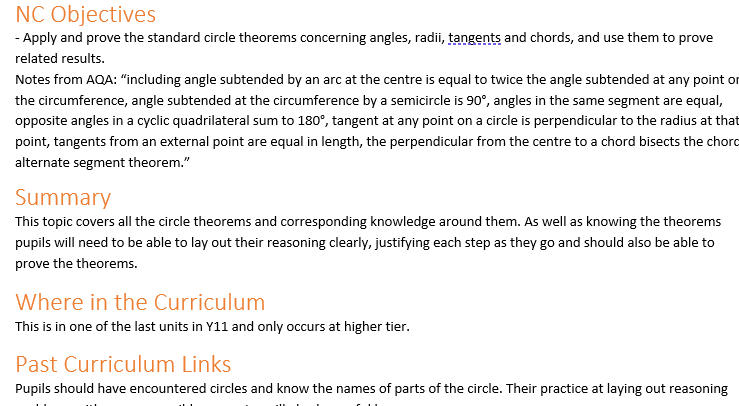
I will talk through one of the guides in detail here (the one for circle theorems), explain each section and show you what it contains. At the end I will include links to other completed examples and a blank template that contains notes on how to produce one from scratch.

Overview 1/7

Despite my earlier grievance, the guides do start by outlining the content from the curriculum that is going to be covered. It then translates this into actual English and makes any relevant links to past and future content both and any other relevant subject areas.

Topic Familiarisation 2/7

Teachers are expected to complete the Topic Familiarisation section themselves (there will be about 5-7 questions). There are some guiding questions here as well for teachers to consider whilst they go through these. Questions like:

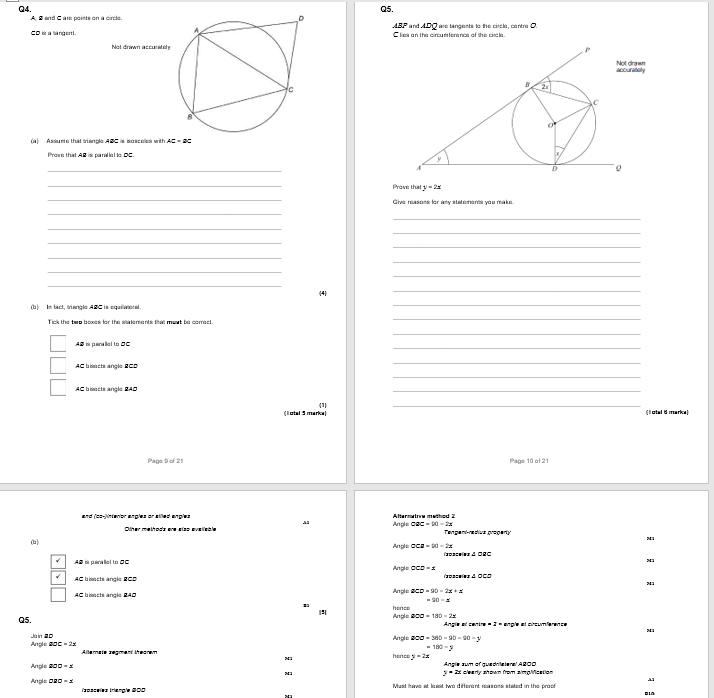
It then moves on to a section called “Topic Familiarisation”. This is designed to showcase some of the weird and wonderful ways that this content is assessed. It contains questions, mark scheme and any examiners notes. It should help direct the teaching to cover more than just a surface level understanding the topic. The caveat here is that teachers need to be aware that they do not teach the topic to ensure students can answer just these questions but rather questions of this type having never seen these before.

– What might my students struggle with?

– What gaps are there in my subject knowledge?

– What do I want a model answer to look like?

– How do I know what to do for each question? What are the clues?

Possible Models and Tips 3/7

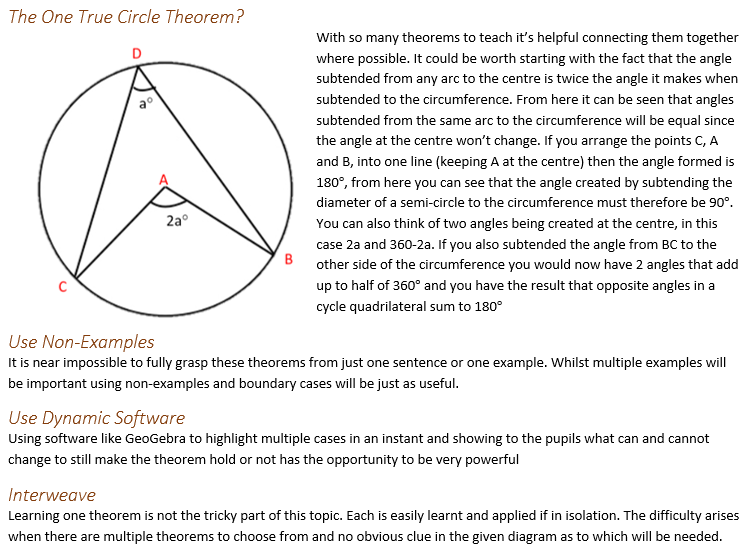
By this point teachers should have a good idea of what needs teaching, i.e. their subject knowledge should be secure. This section is designed to upskill relevant pedagogical subject knowledge. Approaches to teaching, common misconceptions, and general tips are shared unique to this topic.

Key Words 4/7

This is a space for relevant tier 2 and 3 vocabulary to live and be defined. One of the biggest misconceptions I think teachers have here is the sheer quantity of words that people think are tier 3 (maths specific) but are actually tier 2 (in common usage in other domains). To this end, not only are they two put into distinct sections but other uses of the word are defined so that teachers can make explicit links to other times and places students may have encountered these words.

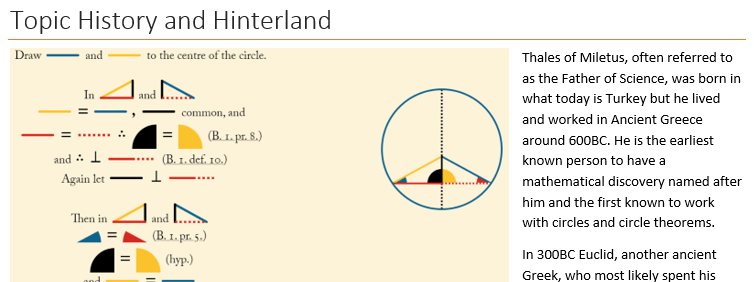
Topic History and Hinterland 5/7

This is a chance for all those rich stories that are sometimes hidden in mathematics to come to life. This section contains relevant stories that have contributed to this part of the curriculum. Where possible, this will help expose both teachers and students to the diverse and global endeavour that mathematics has been and help shine a light all the fantastic people and civilisations that have contributed to the subject we know today.

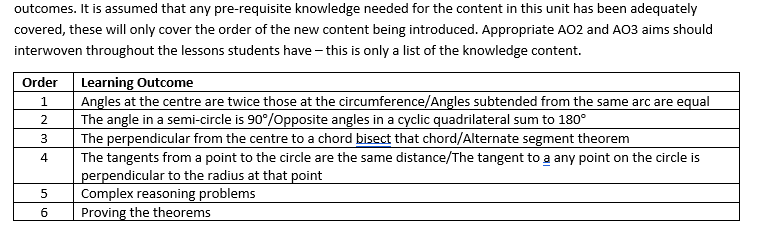
Possible Learning Sequence 6/7

This suggests a possible sequencing of how this content could be taught. Each section is not a lesson as this will need to vary from class to class, but there is an attempt to sequence it logically in a way that will be conducive to learning.

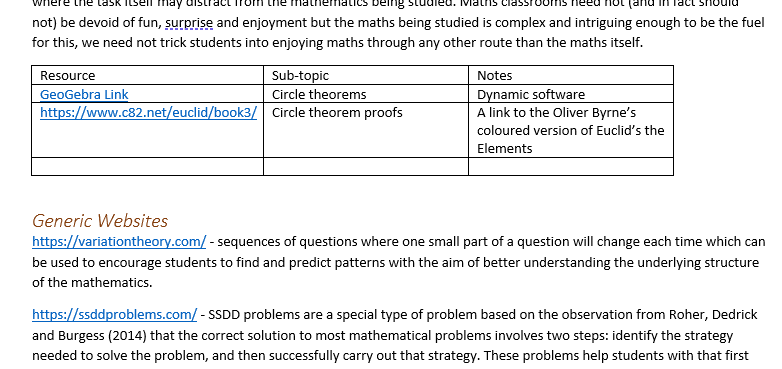
Resources 7/7

This last section contains a generic list to some tried and tested websites and a brief description of what they are (think Corbett, Geogebra, Nrich, Craig Barton’s websites…) but also contain specific resources that could be useful for this topic.

What Next?

The construction of these is currently an ongoing process. Some that have been made by myself are here and most are 90% complete. As a Trust we are trying to get full curriculum coverage and are prioritising those areas that either offer the most challenge from a subject knowledge point of view (circle theorems, advanced trigonometry…) or those that offer a particular challenge from a pedagogical subject knowledge stance (negative numbers, fractions…):

Template

Here is a blank template with written guidance for each section should you wish to make your own (feel free to delete all the branding surrounding it)

I hope some of this is useful to either yourself or colleagues. If it is, please feel free to share these around.

I’m always interested in what people make of this so please feel free to comment with thoughts, questions or incomplete musings. Follow this or my Twitter account Teach_Solutions for similar content in the future.
Dance Like Nobody’s Watching

Should we be teaching with the mindset that no one is listening?

I have found teaching to be so multi-faceted that it is hard for one training session or new idea to have a sizeable impact on my pedagogy. Instead, improvement for me has been the outcome of many different skills being slowly developed over time. Every now and then though, something happens which fundamentally changes my approach to teaching. This piece is about the biggest shift that has happened in my teaching recently, and the thinking that got me there.

The Big Idea

Teach like no one is listening. By that, I mean that no matter how clear I believe my explanation to be, how absolute I believe students’ focus on me is, how accurately I believe I am threading the needle between content that is too challenging and content that is too easy, I assume that not a single student has either understood or even listened to my explanation.

This is not about lowering expectations. I still want all the above things: clear explanations, a calm learning environment, well-pitched content. I just don’t take any of them as being any guarantee that anyone has learned anything. The mantra of “hope for the best, plan for the worst” is useful here and trust me, it changes everything.

This can be a hard shift to believe even needs to happen for many reasons. It is possible to hone both the clarity of your explanations and behaviour management strategies to the point that this seems redundant and almost defeatist. You could have taught something in the past that landed really well. You may be teaching to a room full of people with complete attention aimed at you, a room of 30 students seemingly hanging off your every word. Unfortunately, none of these are guarantees that anyone is learning anything and, if not addressed, you risk students picking up misconceptions, having gaps in knowledge, being confused and generally not learning as well as they could be.

Something interesting happened over lockdown. As classrooms moved from looking like this:

to this:

All of a sudden it became clear I had no idea what was being understood by students. A quick upskilling in how to use polls on Teams and whiteboard.fi fixed this. Back in the classroom though, despite all those smiling, seemingly attentive faces aimed at my teaching, I realised I had just as much guarantee of what was going on in their heads as when they were just dots on a screen. Something needed to change.

The Consequences

Check everything from everyone. It’s as simple as that really. After any period of modelling, getting students to attempt it, bit my bit, and show me, as a class, that they can do it before working independently is vital.

There has been a lot of talk of mini whiteboards recently but I think that talk misses the point. Mini whiteboards are just a tool. When teaching remotely to a someone without a camera, mini whiteboards are useless. What is important, is having the means, somehow, to check everyone’s understanding of everything. It just so happens that a cheap piece of plastic and a whiteboard pen are an invaluable tool when trying to achieve this in a classroom.

As soon as someone finds another way to more simply, quickly and accurately assess the understanding of an entire class all at once then I’ll use that instead. Until then, mini whiteboards are indispensable in acheiving my aim here.

The same applies to checking instructions about how to engage with a task as well. What conditions students should be working in? What classifies as success today? How long have they got? What should they do if they are stuck? All these things need checking or, that information needs storing somewhere permanent like on a sheet or on the board.

The assumption that nothing I have said has been listened to has improved my practice so much. There is no longer anywhere to hide, little chance of starting a task without comprehending the content, and no excuse for not following the behaviour routines expected.

If phases of the lesson don’t include multiple checks of all the key components needed for success from every student in the room then, under this new mantra, I’m assuming something is going to go wrong.

It involves removing ego from the equation. Assuming that, no matter how engaging or how clear I think I may be, I cannot assume that what I am saying is understood or, in truth, that all 30 students even particularly care what I’m talking about on any given day. I think it is essential in delivering a great education for all students that even those who are struggling to engage on any given day still have to do as much work as everyone else.

Mark Twain said “Dance like no one is watching.” I say “Teach like no one is listening”.

I’m always interested in what people make of this so please feel free to comment with thoughts, questions or incomplete musings. Follow this or my Twitter account Teach_Solutions for similar content in the future.
Are you thinking what I’m thinking?

How can we all be sure we’re talking about the same thing unless we’ve seen it?

Have you ever read a book and then when the film comes out things aren’t quite how you imagined them to be? What if the same happens in education?

It feels entirely possible to either metaphorically or literally drown in the amount of literature that is being released (this blog included) giving advice about how to do things well or better in education.

Nothing wrong with any of that. It’s great. The availability to access other people’s thoughts and ideas has never been easier. This has lead to incredible conversations, fueled further blogs, podcasts, articles, books which has then fueled more blogs, podcasts, articles and books, which has then… and hopefully somewhere along the line the experience pupils receive has been improved as well.

Although the profession now seems to be talking the same language (cognitive load, explicit instruction, SLANT, be seen looking, I do/We do/You do…), are we certain that means the same to all of us? Much like we can never be sure if two people see colours the same, can we ever be sure we mean the same thing when we use these terms? I suspect, unfortunately, not. At least not without tearing yourself away from just the words and getting yourself into a school and actually seeing it in action!

I felt relatively well read around all this but nothing could prepare me for what it was like working at King Solomon Academy. All of a sudden, I wasn’t reading or listening to thoughts about great practice, I was seeing it and living it.

I saw silent corridors be purposeful (everyone has their doors open all the time and break times don’t happen all at the same time so any noise in the corridor was going to disturb others lessons), family dining be truly commutity focused, lessons be distraction free, warm-strict be applied consistently, explicit instruction in action, think pair share working like a well-oiled machine. It raised the bar for me of what a school is able to acheive.

Having seen what is possible feeds into everything else I do. It raises expectations, gives me no reason to say something “isn’t possible” and, I hope, helps me push the people I work with to be even greater versions of themselves.

If it’s been a while since you’ve visited another school then try to change that. People’s doors seem more open than ever. From the wonderful programme Steplab are running to the general kindness of people that open their doors to others. Visiting a school has never been easier. The availability of data these days should mean you can also pick a school that suits your catchment and gets great outcomes.

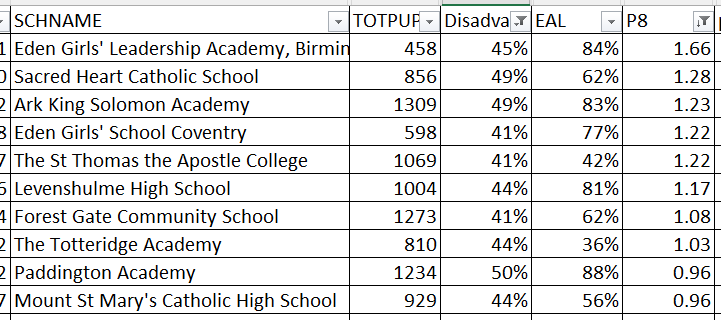
Here is a table, for example, of top progress scores for Secondary schools from 2022 who have more than 40% disadvantaged cohort. Many of these schools welcome visitors and you can be pretty sure you’ll learn something new if you visit.

Next time you are thinking about reading one more book, why not try asking for a day to visit somewhere great instead? Any sensible headteacher will be aware of the power that this CPD can have and the experience may just help reframe everything you thought was possible.

I’m always interested in what people make of this so please feel free to comment with thoughts, questions or incomplete musings. Follow this or my Twitter account Teach_Solutions for similar content in the future.

Hollywood has an Education Problem

I know what great teaching looks like, so how come movies can still make me feel so guilty?

These days, poor classroom practice is often blamed on outdated CPD, unhelpful training programmes, and a focus on gimmicky approaches. I feel like I now have a pretty good nose for bullshit nonsense and my pedagogical weather vane turns less in the direction of whatever new fad is popular and remains relatively steady these days. I consider myself well-informed and finally able to consistently teach lessons I’m happy with. Despite over a decade at this now there is still one source of information, one exposure to teaching practice, that makes me doubt myself more than any other, that makes my weather vane wobble… the silver screen.

Different sources have always inspired aspects of my career. These people have been colleagues, course leaders, children, folks on social media, friends, and family. Some have been inspirations from before I started and many influence me still.

There is one big group that I have missed out of that list. A group of people that have had perhaps a bigger impact on my visions of what me as a teacher should look like. Hollywood. The are the various screenwriters, actors, and directors that have presented to me a specific version of what a great teacher should be.

At the start of my career, this group had influenced me as much or even more than the other groups. The movies are awash with depictions of teachers. What’s more is that there is often the same distinctions made in every corner of Hollywood when defining the characteristics that make up “good” and “bad” teachers.

Western media seems to broadly have agreed what it takes to make a teacher fantastic. The issue is that this seems to be at best incomplete, and at worst totally at odds to what experience and research tells me works in practice.

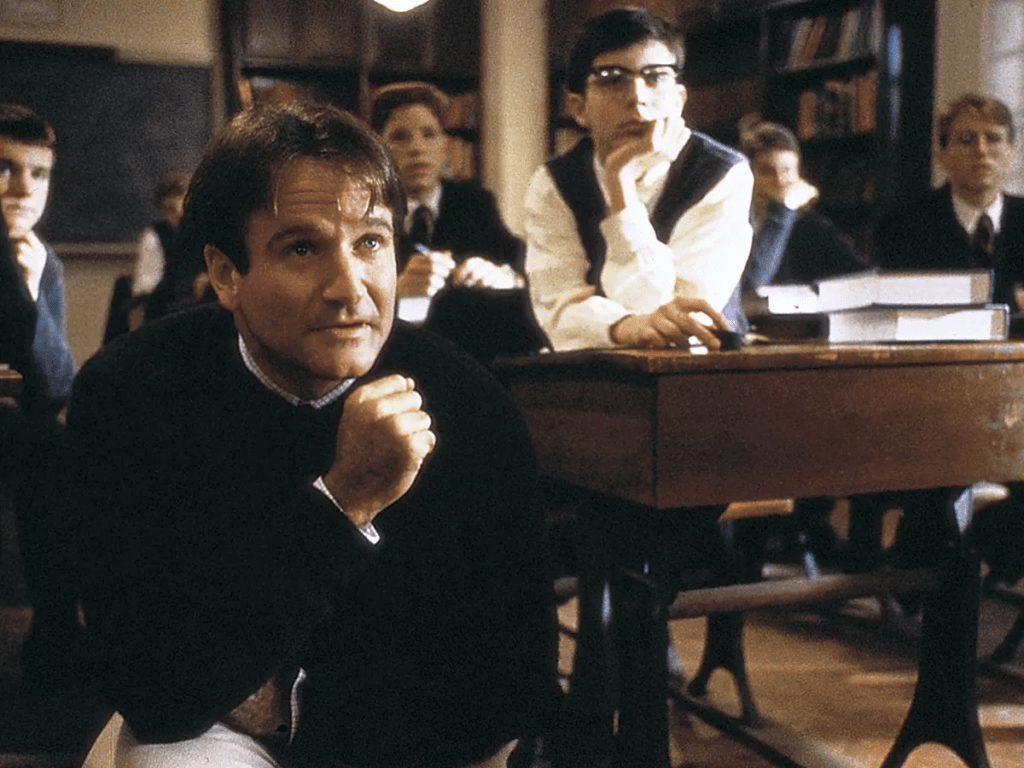
In the good corner you have the John Keatings (Dead Poet’s Society), Miss Honeys (Matilda), Professor Lupins (Harry Potter), Erin Gruwells (Freedom Writers) and Dewey Finns (School of Rock) of the world. Each of their films has a nemesis, a villain, their antithesis sitting across from them in the bad corner. The Miss Trunchbulls, Professor Snapes, various heads of departments with chips on their shoulders… whoever that person is who insists the main teacher sticks rigorously to the syllabus and the school rules. Not only do these antagonists do things which make us actively dislike them personally, the portrayal as them as teachers also leaves us the with the impression that their practice is as evil as they are.

At its most basic, the dichotomy of The Pedagogically Good vs The Pedagogically Evil looks like this:

Good TeachersBad Teachers
Relationship focusedContent focused
CaringStrict
Goes off-curriculumSticks to the curriculum
Invests time after schoolNot seen after the bell
Rebels against school rulesSticks to school rules
Leads on a cult of personalitySystem-led

This blog is not saying that the content from the “good” column is actually bad, simply that it is not enough to create the sort of change that is often portrayed in these shows by itself. Without a healthy dose of both columns I do not think students receive a great education or that teachers can have a sustainable life. I’m not suggesting we send students to The Chokey or recite monotonically from a textbook every day but a more nuanced approach to teaching is needed than is often shown on the big screen.

Last week I watched the film Another Round. It follows four teachers who decide to be constantly half-cut to see what effect there is on their personal and professional lives. The film portrays the transition from sober to tipsy as one which positively impacts their teaching practice. These two versions of themselves (bad when sober and good when half-cut) follow the descriptors above. This is represented initially by them leading from the front and going through the same routines every lesson to, after a few drinks, trying novel things, having students sing in the dark with their eyes closed, comparing the students’ own drinking habits with those of Churchill to increase engagement, sitting in students’ seats while pupils lead from the front and, ultimately, inspiring their students to perform at a high level and graduate happy.

The tropes from this movie were nothing new, what struck me was the power that the film had to make me feel inadequate. At a stage in my career where I am fairly confident these “engaging” strategies (although useful and powerful at times) are nowhere near enough, in and of themselves, to get students to outshine the expectations the system places on them. I should not be doubting myself because of this film, yet I find I am. (Chances are you haven’t seen this film but rumours of an English language version with Di Caprio taken the lead role are swirling, so strap yourself in for some pangs of guilt on the horizon but please, please, hold your ground!).

All these films depicting teachers of academic subjects seem to disproportionately focus on novelty and relationships and leave me feeling like I’m the Trunchball in a world of Miss Honeys. I know that my work in the past has yielded great results and that students have felt cherished and cared for along the way yet, it only takes one film and I’m almost ready to insist my next lesson will be outside and that me and my students must rebel against any and all rules. Down with the system!

I found the urge to resist this when I first starting teaching, I’m afraid to say, impossible. I didn’t quite go full Hollywood, I didn’t have the nerve to rip up a textbook in front of students whilst they stood on their desks calling me Captain all the while forming a rock band to revolt against the principal, but at times, I wasn’t far off.

Is there a solution?

I know that a lot of what makes great teaching may not look great on screen and that the majority of the intended audience aren’t experienced teachers and so simplified version of teaching are needed to get the point across but it is possible to do it another way.

I can think of two examples that really resonate with my experience of what it takes to overcome the odds to achieve great results. Two occasions where knowledge-rich environments are combined with clear rules, where the adult carefully balances the needs of explicitly modelling content with forming those all-important relationships in a safe and predictable environment.

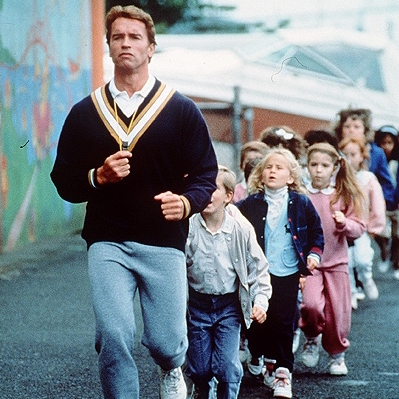
The first, and I mean this quite sincerely, is Arnold Schwarzenegger in Kindergarten Cop. If that isn’t a great example of how clear routines, positive reinforcement and leading from the front can set the scene for a great learning environment I don’t know what is. From the initial chaos that feels all too familiar to the eventual creation of a safe and productive learning environment through clarity and leadership, it feels like a genuine classroom and a genuine, albeit condensed, journey a developing teacher would go on. I can’t think of a better example highlighting the need for routines when working with children whilst also showing the ability to care and nurture a class at the same time. I also can’t think of a better representation of what it can be like teaching a class for the first time.

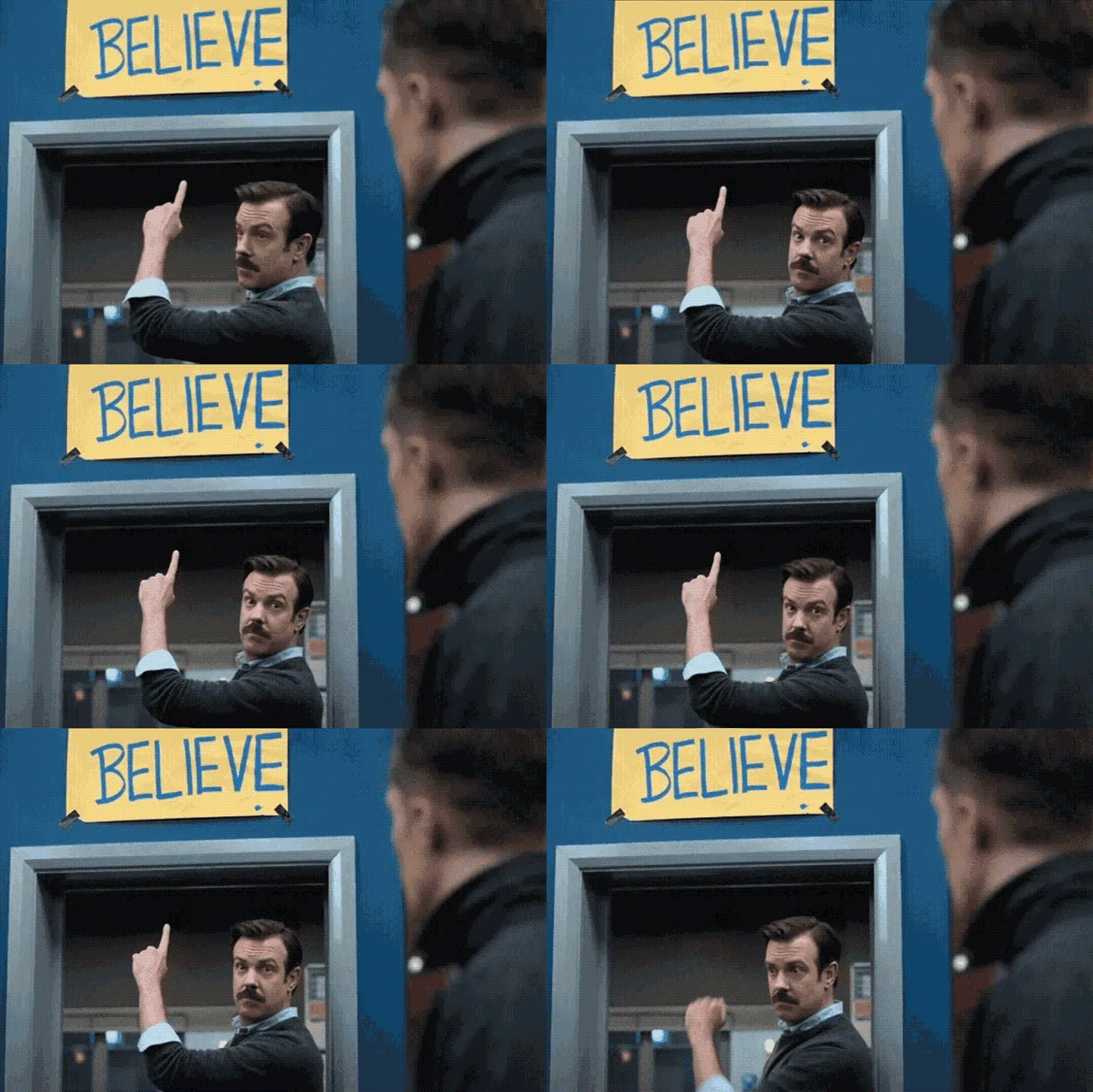
The second is the pair from Ted Lasso, the show’s namesake and Coach Beard. Two Americans in a “fish out of water story” coaching a football team in the UK. Whilst Ted, who knows nothing about football (“Heck, you could fill two internets with what I don’t know about football.”) goes about getting the culture right, Coach Beard is a font of knowledge about the sport. In tandem, they get the team training hard and believing in themselves. Neither of those two men, without the other, would lead to those players being the best versions of themselves on the football pitch. The combination of knowledge, training, and hard work mixed with coaching self-belief, respect, and determination is a rare combo. Although it takes two of them to do the job, combined they represent the qualities any great teacher needs.

Perhaps representations of sports leaders get this balance right more often than not, but why people think academia doesn’t require the same level of hard, sometimes monotonous, work to improve oneself as physical sport baffles me.

Here’s hoping that in the future, we can either have better representations of what it really takes to be a great teacher on screen or, at the very least, that I have the confidence to not feel so bad about myself when I see an inspiring yet flawed teacher presented to me on the TV.

I’m always interested in what people make of this so please feel free to comment with thoughts, questions or incomplete musings. Follow this or my Twitter account Teach_Solutions for similar content in the future. Also, check out the rest of this site, there’s some good stuff knocking about the place.